AI Visibility
Citations & Content Gaps
See which sources AI engines cite and where you are missing.
A mention is good; a citation (a link back to you as the source) is better. Grandranker tracks both, and flags content gaps — queries where competitors show up in AI answers and you don't.
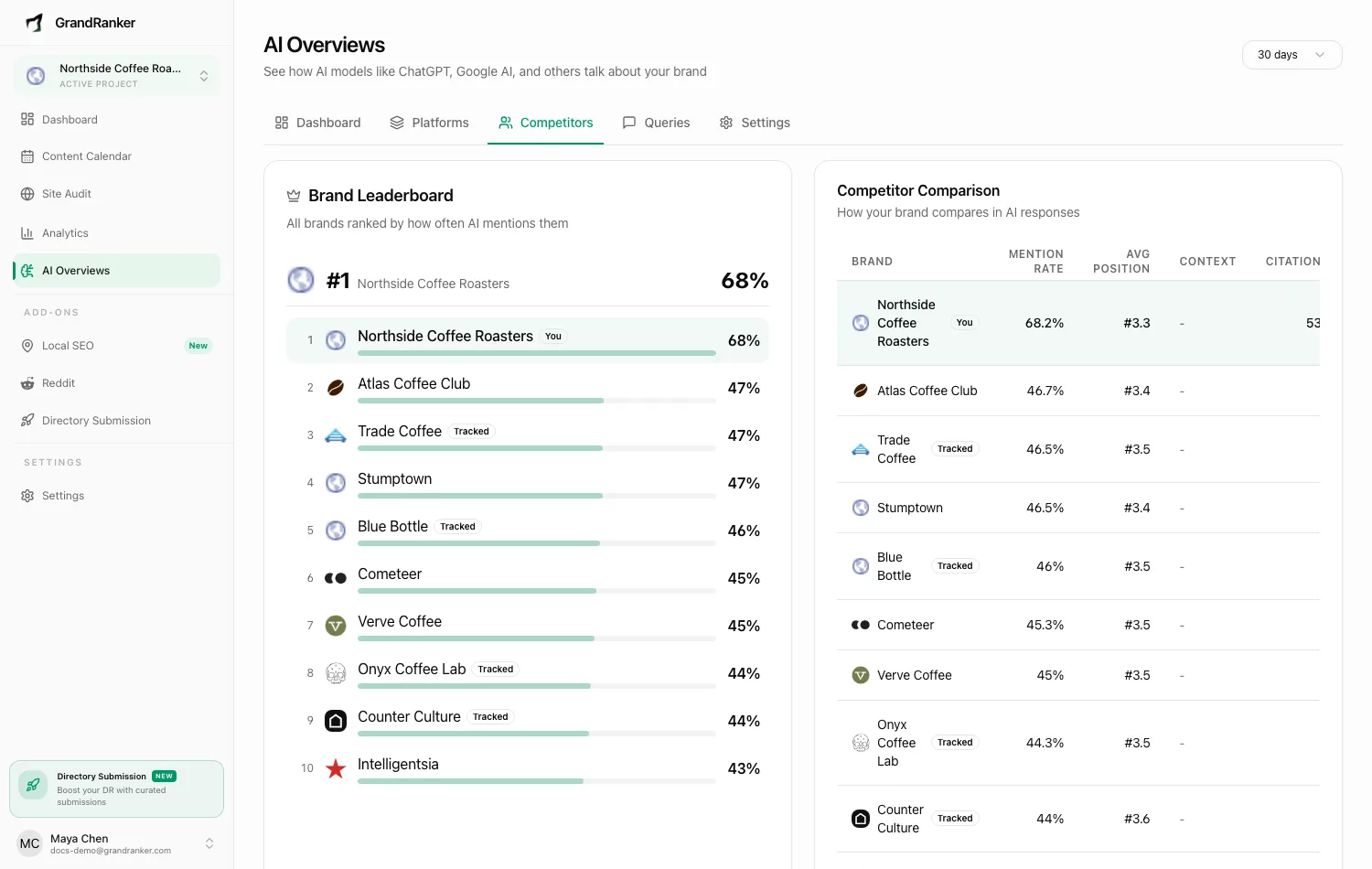
Where citation data appears
- Dashboard tab: "Linked to Your Site" card — your overall citation rate and its trend.
- Platforms tab: each platform card has a Citations bar, so you see which models cite you vs. just mention you.
- Query detail page: open a query from the Queries tab for the raw per-platform responses, with your citations highlighted.
Tracked domains
In Settings → Tracked Domains, add a domain (e.g. ahrefs.com) to compare its citation rate against yours — useful for benchmarking a competitor or a publication you'd like to displace.
Citation Exchange
Opt in under Settings → Citation Exchange to get cited by relevant brands in the pool, and cite them back in your articles. The panel shows citations received, given, and pool size. Leave any time.
Only relevant, in-context citations are placed. It's not a link scheme.
Content gaps
A gap is a query where a competitor appears in the AI response and you don't. Grandranker detects these automatically from scan data. Each gap shows the query, which platforms you're missing from, and which competitors appear instead.
Closing a gap
Click Generate Article on a gap to create a draft for that query using your article settings — review and publish like any other article. You can also select multiple queries on the Queries tab and bulk-generate.
After publishing, give it a few scan cycles — platforms with web search pick up new content faster than those on training data.
FAQ
Why does AI cite my competitor instead of me?
AI favors easy-to-parse sources: clear structure, direct answers, schema markup. Run a GEO Audit to check your pages are technically citable.
No content gaps showing?
You appear wherever competitors do in scanned responses. Keep your query list sharp — see Queries & Prompts. Gaps only surface for queries you monitor.
Still stuck? [email protected]