Key Takeaways
- Why Competitor Link Analysis: Why Competitor Link Analysis Matters in 2026
- AI-Powered Backlink Gap Analysis: Finding Opportunities Competitors Miss
- How to Find Competitor: How to Find Competitor Link Opportunities with AI
- GrandRanker: Automated Link Insights Built Into Your SEO Workflow
- Semrush: Enterprise-Grade Backlink Intelligence with AI Writing
- Ahrefs: Industry-Leading Backlink Index for Deep Link Research
Why Competitor Link Analysis Matters in 2026
The competitive intelligence market is valued at $104 billion annually, and for good reason. Understanding where your competitors get their backlinks isn't just a nice-to-have anymore, it's essential to staying competitive. When you know which sites link to your rivals but not to you, you've found your next link-building targets. That's the gap analysis that moves the needle.
The problem most teams face is that manual link research is painfully slow. You'd need to spend hours pulling data, cross-referencing domains, and identifying patterns. AI tools for competitor link analysis eliminate that friction. They scan thousands of backlinks in seconds, surface opportunities you'd miss manually, and feed you actionable insights instead of raw data.
At GrandRanker, we help teams automate this process to outpace those doing it by hand.
AI-Powered Backlink Gap Analysis: Finding Opportunities Competitors Miss
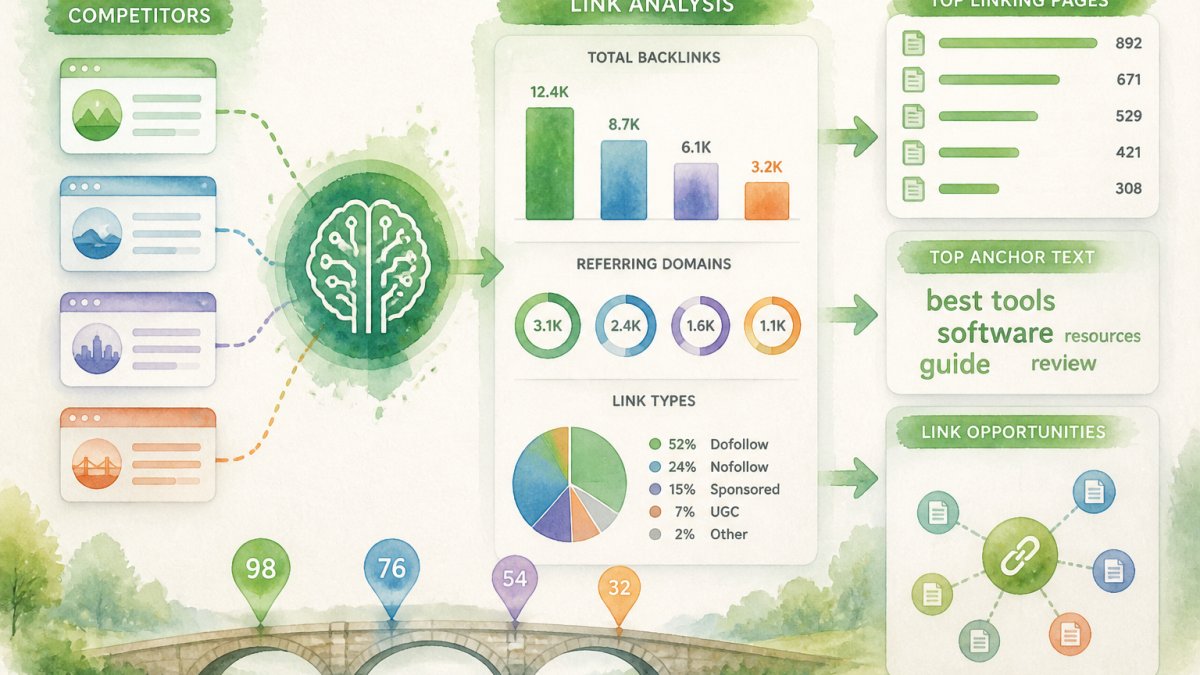
Backlink gap analysis is the practice of comparing your link profile to your competitors' to identify domains linking to them but not to you. It's the most direct path to new link sources because you're targeting sites that have already proven they link to content in your space.
Here's what makes AI different from manual analysis: traditional tools show you the data. AI tools interpret it. They spot patterns across hundreds of competitor domains, weight opportunities by domain authority and relevance, and surface the most promising targets first. According to Nick Lafferty's 2026 competitive intelligence analysis, the modern competitor analysis stack now pairs traditional SEO tools with AI-search competitive intelligence tools for maximum coverage.
The real power emerges when you combine backlink data with content analysis. You're not just finding sites that link to competitors, you're understanding why those sites linked. Did they link to a case study? A resource guide? A specific data point? That context tells you what type of content works in your space. AI processes that context automatically, where humans would need to manually review each link.
How to Find Competitor Link Opportunities with AI
Finding competitor link opportunities with AI follows a straightforward process, but the execution matters. Start by identifying your top 3-5 competitors, the ones actually winning for your target keywords. Feed their domains into an AI-powered backlink tool. Most platforms now offer AI-generated domain summaries that highlight traffic trends and top-performing pages automatically.
Next, run a backlink gap analysis. This is where AI tools shine. They'll compare your link profile to each competitor's and surface the gaps. Instead of a raw list of 10,000 domains, you get 50 prioritized opportunities ranked by relevance and domain authority. The filtering saves weeks of manual work.
Then analyze the link context. Click through to understand what content earned those links. Is it a blog post? A tool? A research report? AI can summarize the content automatically, showing you the pattern. Most links to competitors came from educational content? That's your signal. Most came from industry directories? That's a different strategy.
Finally, reach out. But don't pitch blind. Use the context AI provided to personalize your outreach. Reference their existing content. Explain why your resource is better. That specificity increases response rates dramatically.
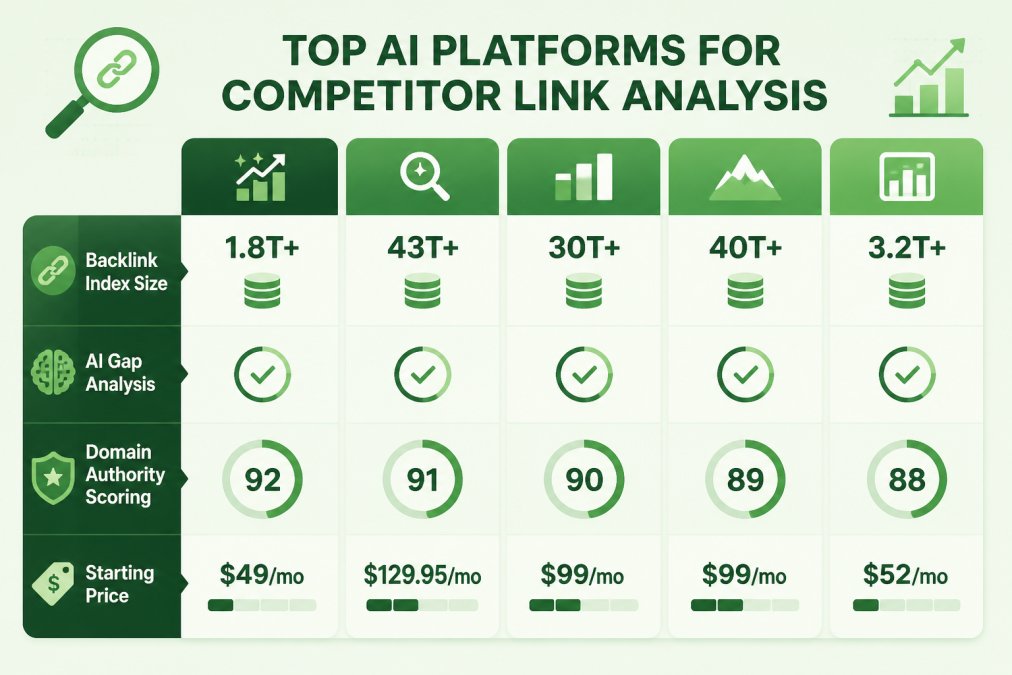
Top AI Platforms for Competitor Link Analysis
The market for AI tools for competitor link analysis has expanded significantly. Here's what separates the leaders from the rest.
GrandRanker: Automated Link Insights Built Into Your SEO Workflow
GrandRanker stands out because it doesn't treat link analysis as a separate task, it's woven into your entire SEO workflow. The platform automates keyword research, content creation, and optimization, then feeds you backlink insights that align with your content strategy. Instead of analyzing links in isolation, you see which links would matter most for the keywords you're actually targeting.
The AI identifies competitor link opportunities automatically and surfaces them as you build content. This integration means you're not context-switching between tools. You research a keyword in GrandRanker, see which competitors rank, and immediately get their top-performing backlink sources. The platform then suggests content angles that would appeal to those same linking domains.
For founders running lean operations, this automation is critical. You get the link intelligence without dedicating a person to backlink analysis. GrandRanker handles the heavy lifting, finding opportunities, prioritizing them, and helping you focus your outreach efforts.
Semrush: Enterprise-Grade Backlink Intelligence with AI Writing
Semrush has built its reputation on comprehensive backlink data. The platform's Backlink Gap tool identifies unlinked opportunities, and the AI writing assistant helps you create content designed to earn those links. You're not just finding opportunities, you're generating the assets to capitalize on them.
The Backlink Analytics module shows you where competitors get their traffic from, broken down by link source. The AI summarizes competitor traffic trends, so you understand not just that they have backlinks, but which ones matter. For enterprise teams with dedicated SEO staff, Semrush's depth is a strong offering.
The downside can be complexity. Semrush has many features. If link analysis is core to your strategy, the investment can be valuable.
Ahrefs: Industry-Leading Backlink Index for Deep Link Research
Ahrefs is known for its backlink index. Their database is one of the largest in the industry. The Site Explorer tool gives you a complete picture of any competitor's link profile, and the Link Intersect feature directly answers the question: "Which sites link to them but not to me?"
For teams doing serious link research, Ahrefs is the default. The platform doesn't have the flashiest AI features, but it doesn't need them, the data quality speaks for itself. You get accurate, comprehensive backlink information that you can trust.
The trade-off can be price and learning curve. Ahrefs requires users to invest time in learning it. For small teams just getting started, it might be extensive. For established SEO programs, it's a valuable tool.
Moz Pro: Domain Authority Tracking with Link Quality Scoring
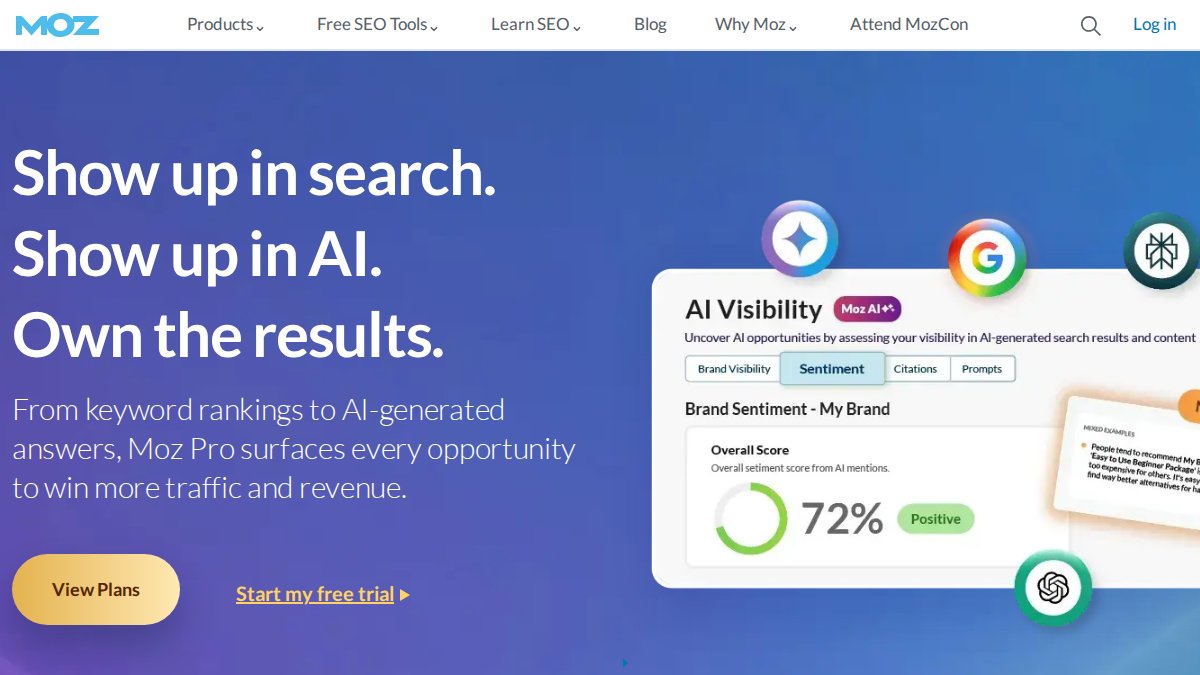
Moz Pro's Link Explorer focuses on link quality over quantity. The platform's proprietary Domain Authority metric is widely recognized across the industry, and Moz's Spam Score helps you avoid toxic backlinks that could hurt your site. The AI automatically flags low-quality links, helping you prioritize opportunities.
Moz is a choice for teams that prioritize link quality. You might find fewer total opportunities than with some other tools, but the ones you find can be impactful. The interface is also user-friendly, and new users can get productive quickly.
The limitation can be index size.
SE Ranking: Affordable Backlink Monitoring for Growing Teams
SE Ranking delivers solid backlink analysis at a price point that can work for bootstrapped teams. The Backlink Checker shows you competitor link sources, and the platform's automated reporting saves time on manual analysis. For the cost, you get competitor traffic research, website audits, and rank tracking all in one platform.
How AI Transforms Manual Link Analysis Into Actionable Strategy
Manual link analysis is pattern recognition at scale. You pull competitor backlinks, scan the list, make notes about which domains look promising, and then manually check each one. It's tedious, error-prone, and incredibly slow. AI eliminates the tedium by doing the pattern recognition automatically.
Common Mistakes When Using AI for Competitor Link Research
The biggest mistake is treating AI output as gospel. AI tools are powerful, but they're not infallible. They can misclassify links, overweight certain factors, or miss nuance in link context. Always verify AI recommendations before investing time in outreach.
| Tool | Starting Price | Best For | Key Strength |
|---|---|---|---|
| GrandRanker | Free trial | Founders automating SEO | Integrated link + content strategy |
| Semrush | $139.95/month | Enterprise teams | Comprehensive backlink data |
| Ahrefs | $99/month | SEO specialists | Largest backlink index |
| Moz Pro | $99/month | Quality-focused teams | Link quality scoring |
| SE Ranking | $55/month | Budget-conscious teams | Affordable full-suite tool |
Ready to dominate search results?
Join 8020+ businesses using GrandRanker to track rankings, fix SEO issues, and grow organic traffic.
Buy NowFrequently Asked Questions
AI automates the time-consuming process of analyzing thousands of backlinks, identifying patterns humans would miss. Instead of manually reviewing competitor backlink profiles, AI tools scan entire link profiles in seconds, flag high-quality opportunities, and surface gaps where competitors have links but you don't. Some AI tools, for example, can identify competitors using URL input alone—a task that would take hours manually.
Backlink gap analysis identifies websites linking to your competitors but not to you—these are your most realistic link-building targets. AI accelerates this by automatically comparing your backlink profile against multiple competitors simultaneously, highlighting patterns in which sites link to them. This shifts link building from guesswork to data-driven strategy, focusing your outreach on domains already interested in your industry.
Quality AI tools filter by multiple signals: domain authority, spam score, traffic relevance, and anchor text quality. Many platforms analyze each backlink's strength before surfacing opportunities. However, AI's real strength isn't just finding links—it's recognizing which links drive actual referral traffic and fit your niche. Always verify that your chosen tool includes quality metrics, not just volume.
AI identifies opportunities; you still execute outreach. After AI surfaces gaps and high-quality targets, your team contacts those sites with personalized pitches. The AI removes the research bottleneck—instead of spending weeks finding targets, you can focus on outreach. Relationship-building and content pitches remain human-driven for best results.
Continue Reading
More guides to level up your SEO strategy.