Key Takeaways
- Why Backlinks Matter for: Why Backlinks Matter for YouTube Videos
- How to Get Backlinks: How to Get Backlinks to YouTube Videos Using AI
- Top AI Link Building: Top AI Link Building Tools for YouTube Content
- Using AI for Link: Using AI for Link Building Outreach at Scale
- Track Your YouTube Backlinks: Track Your YouTube Backlinks with a YouTube Backlink Checker
- Common Mistakes When Building: Common Mistakes When Building Backlinks to YouTube Videos
Why Backlinks Matter for YouTube Videos
Backlinks to YouTube videos are critical for both search visibility and channel authority. When other websites link to your video content, YouTube's algorithm recognizes it as a signal of quality and relevance. This matters because videos with more backlinks tend to rank higher in YouTube search results and get recommended more frequently to viewers.
The relationship between backlinks and YouTube performance is straightforward. Each link from an external site acts as a vote of confidence. More votes mean YouTube treats your content as more authoritative. This directly impacts how often your videos appear in suggested content and search rankings.
At GrandRanker, we've analyzed how creators build sustainable backlink strategies. The data shows that videos with consistent backlink growth outperform those relying on YouTube's algorithm alone. Backlinks also improve your overall domain authority, which benefits all your content, not just individual videos.
Building backlinks manually takes weeks of outreach work. This is where AI tools change the game. They automate the research, personalization, and follow-up process. Instead of spending hours finding relevant websites and crafting emails, AI handles the heavy lifting while you focus on creating better content.
How to Get Backlinks to YouTube Videos Using AI
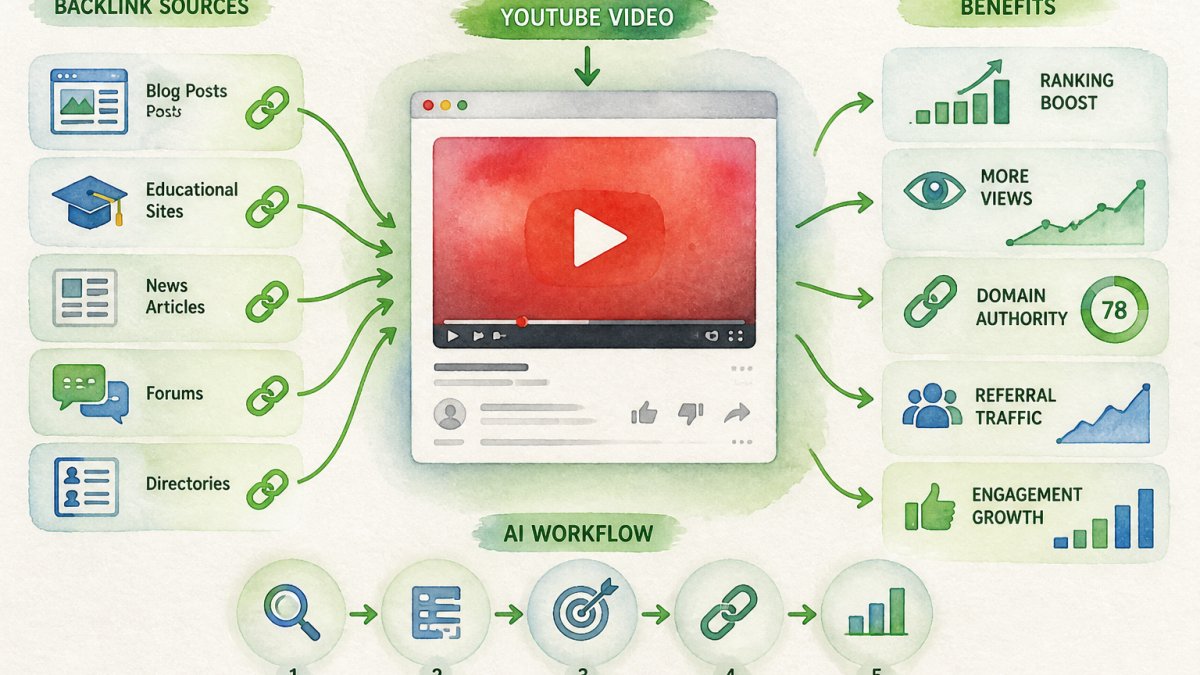
Getting backlinks to YouTube videos using AI involves a clear process. Start by identifying websites in your niche that might link to your content. AI tools scan the web and find relevant prospects automatically. This eliminates days of manual research.
Next, use AI to personalize outreach messages at scale. Instead of writing individual emails, AI generates customized pitches based on each prospect's content. The personalization feels genuine because it references specific articles or recent posts from their site.
Here's the practical workflow:
- Identify prospects: AI finds websites linking to competitor videos or covering your topic
- Analyze their content: AI reviews their recent posts to understand their focus
- Create personalized pitches: AI generates email copy that references their specific work
- Send outreach: Automation tools deliver emails at optimal times
- Track responses: AI monitors which prospects engage with your message
- Follow up automatically: AI sends reminder emails to non-respondents after set intervals
The key advantage is speed and scale. Manual outreach might reach 20-30 prospects per week. AI tools can reach hundreds while maintaining personalization. Quality doesn't drop because the AI references real details from each prospect's site.
One common mistake is treating AI-generated emails as final copy. Always review and add a personal touch. A sentence or two from you, mentioning why you specifically chose that site, makes the difference between ignored emails and responses.
Top AI Link Building Tools for YouTube Content
Several AI-powered tools help build backlinks to YouTube videos. Each handles the outreach process differently, but all automate the most time-consuming parts of link building.
GrandRanker stands out for creators focused on growing organic traffic. It combines AI-powered keyword research with content optimization and automated outreach. The platform identifies which YouTube topics have backlink potential, then helps you create content worth linking to.
Semrush offers a backlink analysis tool that identifies link opportunities for your YouTube content. You input your video URL, and the tool shows which sites link to similar content. It then suggests outreach targets based on their authority and relevance.
Ahrefs provides detailed backlink research and competitor analysis. Its Site Explorer shows exactly which websites link to competitor videos. You can filter by domain authority, traffic, and relevance. Ahrefs includes email outreach templates, though you'll still need to personalize most messages manually.
Pitchbox specializes in relationship-based outreach. The platform combines AI prospect research with email management. It tracks all your outreach conversations in one dashboard and sends automatic follow-ups. The AI learns from your successful pitches and improves future outreach over time.
BuzzStream focuses on influencer and media outreach. It finds journalists, bloggers, and content creators who cover your niche. The platform includes email templates and tracks which prospects respond to different messaging approaches. For YouTube creators, it's useful for finding creators willing to feature or link to your videos.
Most tools charge based on usage or contact volume. GrandRanker offers a free trial so you can test the platform before committing. Check our pricing page for current rates and feature comparisons.
Using AI for Link Building Outreach at Scale
Scaling backlink outreach means sending hundreds of personalized emails without spending weeks on manual work. AI makes this possible by handling research, writing, and follow-up automatically.
Start by uploading your YouTube video URL into an AI tool. The platform analyzes your content and identifies what makes it link-worthy. It then searches for websites that have linked to similar content. This gives you a qualified list of prospects likely to be interested.
The next step is personalization at scale. AI reads each prospect's recent blog posts or social media activity. Based on what it finds, the AI generates a unique email pitch for that specific person. The pitch mentions their recent work and explains why your video complements their content.
Here's what an AI-generated pitch might look like:
Hi [Name], I noticed your recent post on [topic] got great engagement. We just published a detailed YouTube video covering [related angle]. It directly addresses the gap you mentioned in your article. I think your audience would find it valuable, and I'd love for you to check it out.
This approach works because it's specific and relevant. The prospect sees you've done homework on their content. They're more likely to click the link and watch your video.
After sending initial pitches, AI automates follow-up. If a prospect doesn't respond in 5-7 days, the system sends a reminder. This increases response rates without requiring you to manually track each conversation.
A critical practice is reviewing AI copy before sending. Read a sample of the generated emails. If they feel generic or miss important details, adjust the AI's instructions. Most tools let you set tone preferences and specific talking points to include.
Track Your YouTube Backlinks with a YouTube Backlink Checker
Knowing which websites link to your videos is essential for measuring progress. A YouTube backlink checker reveals your link profile and shows where your authority comes from.
These tools display several key metrics:
- Total backlinks: How many external sites link to your video
- Referring domains: How many unique websites link to you (more valuable than total links)
- Link quality: Domain authority of sites linking to you
- Anchor text: The exact words used in links to your video
- New vs. lost links: How your backlink count changes over time
Most backlink checkers update their data weekly or monthly. This means you won't see new links instantly, but you'll get a clear picture of progress over time.
GrandRanker includes backlink tracking specifically for YouTube creators. You can monitor which videos are gaining the most authority and which outreach campaigns are generating results. This data helps you refine your strategy, focusing on topics and outreach angles that actually work.
When reviewing your backlinks, pay attention to quality over quantity. One link from a high-authority site (domain authority 50+) is worth more than ten links from low-authority sites. Focus your outreach on sites with genuine audience relevance, not just high numbers.
Common Mistakes When Building Backlinks to YouTube Videos
Most creators make predictable errors when building backlinks. Avoiding these mistakes saves time and improves your success rate.
Mistake 1: Generic outreach emails. Sending the same email to 100 prospects rarely works. Even AI-generated emails need personalization touches. Mention something specific about their site or recent content. A two-sentence addition referencing their work increases response rates significantly.
Mistake 2: Targeting low-authority sites. A backlink from a site with no traffic doesn't help your authority. Before outreach, check the prospect's domain authority and monthly traffic. Tools show these metrics instantly. Focus on sites with genuine audiences in your niche.
Mistake 3: Linking to low-quality videos. People won't link to videos that aren't worth linking to. Before asking for backlinks, ensure your video is detailed, well-produced, and genuinely useful. A 3-minute overview won't get links. A 15-minute deep dive on a specific topic will.
Mistake 4: Ignoring follow-up. Most people don't respond to first contact. Sending 2-3 follow-up emails is normal and expected. Without follow-up, your response rate drops 50-70%. Set up automatic reminders through your outreach tool.
Mistake 5: Not tracking results. If you don't measure which outreach campaigns work, you can't improve. Use a backlink checker to see which videos gained the most links. Review which outreach messages got responses. Use this data to refine future campaigns.
Mistake 6: Expecting overnight results. Building backlinks takes time. Most creators see meaningful results after 3-6 months of consistent outreach. Patience and consistency matter more than intensity. One email per week to qualified prospects beats 100 emails to random sites.
Getting Started with AI-Powered YouTube Backlink Strategy
Starting an AI-powered backlink strategy requires three foundational steps.
First, audit your current backlinks. Use a backlink checker to see which videos already have links and where they come from. This baseline helps you measure progress and identify which content types attract links naturally.
Second, choose an AI outreach tool that fits your workflow. The best tool depends on your volume and budget. Start with a free trial to test the platform before paying. Most tools offer tutorials showing how to set up your first campaign.
Third, create a repeatable process. Decide how many outreach emails you'll send per week. Set a schedule for follow-ups. Plan which videos you'll target for backlinks first. Consistency beats sporadic effort.
Here's a simple 4-week starter plan:
- Week 1: Audit current backlinks and identify 50 prospects
- Week 2: Set up AI outreach tool and send first batch of emails
- Week 3: Send follow-up emails and track responses
- Week 4: Analyze results and refine approach for next month
The goal isn't perfection, it's momentum. Each week, you'll improve your outreach based on what worked. After a month, you'll have data showing which angles, topics, and messaging generate the best response rates.
GrandRanker makes this process easier by connecting backlink building with your overall SEO strategy. You don't just get links in isolation. You build links to videos that rank, get cited by AI assistants, and drive real traffic to your business.
Building backlinks to YouTube videos feels overwhelming when done manually. But AI tools remove the time barrier. You can reach hundreds of qualified prospects, personalize at scale, and track results, all without hiring a full-time outreach team. The key is starting with a clear process, testing what works, and refining based on data. Get started with GrandRanker's free trial and see how AI-powered outreach transforms your YouTube channel's authority and visibility.
Ready to dominate search results?
Join 8020+ businesses using GrandRanker to track rankings, fix SEO issues, and grow organic traffic.
Buy NowFrequently Asked Questions
AI automates the entire backlink-building process: identifying relevant linking prospects, personalizing outreach emails, and tracking responses. AI tools analyze your video content, find websites in your niche, generate targeted outreach messages, and monitor backlink performance. This reduces manual work from weeks to days while maintaining quality and relevance. Many AI platforms also identify high-authority sites likely to link to your content.
Start by identifying your target audience and niche websites. Use AI to generate a list of prospects, then let AI personalize outreach emails based on each site's content and your video's value. AI tools can customize subject lines, opening hooks, and calls-to-action for each prospect. Send campaigns in batches, track open rates and responses, and use AI to suggest follow-up strategies. The key is balancing automation with genuine personalization so emails feel human-written.
Yes. Backlinks signal authority and relevance to Google's algorithm. Videos with backlinks from high-authority domains tend to rank higher in YouTube search results and Google's video carousel. Backlinks also drive referral traffic directly to your video. However, quality matters more than quantity—a single link from a relevant, authoritative site is worth more than dozens from low-quality sources. Google's systems detect artificial or spammy backlink patterns and may penalize them.
Use a YouTube backlink checker tool to monitor all external links pointing to your video. Enter your video URL and the tool will display referring domains, anchor text, link quality scores, and traffic impact. Most tools update data weekly or monthly. Track metrics like domain authority of referring sites, anchor text diversity, and referral traffic. This data helps you identify which backlink sources drive the most value and refine your outreach strategy accordingly.
Continue Reading
More guides to level up your SEO strategy.