

GrandRanker vs SEO.ai: Which AI SEO Platform Delivers More Value?

Both GrandRanker and SEO.ai are AI-first platforms built for search-optimized content creation. SEO.ai brings strong NLP analysis and semantic scoring to the table. GrandRanker matches that AI depth while adding auto-publishing, internal linking, and content refresh workflows — all at the same $49/mo price point. Here is how they stack up feature by feature.

We built GrandRanker, so we are biased. But the feature comparison below uses verifiable facts.

Our pick: GrandRanker

For teams that want full-pipeline automation — auto-publish, internal linking, content refresh, multi-site management — at the same $49/mo entry price, GrandRanker wins. For solo writers focused purely on deep semantic NLP scoring of individual drafts they publish manually, SEO.ai is competitive.

SEO.ai vs GrandRanker at a Glance

FeatureSEO.aiGrandRanker
AI Content GenerationAI writer with NLP guidanceFull long-form AI writer
NLP Content OptimizationAdvanced semantic NLP scoringReal-time NLP optimization
Entity and Topic Coverage Analysis
Auto-Publish to CMS
Internal Linking Automation
Content Refresh and Decay Detection
Bulk Article Scheduling
WordPress IntegrationManual exportOne-click auto-publish
Webflow / Shopify / Custom CMS
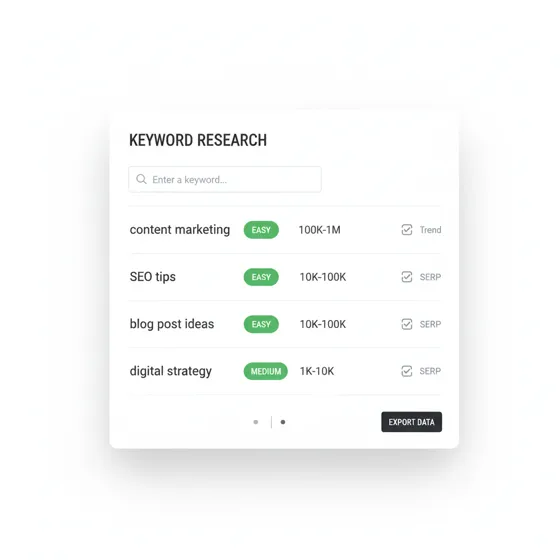
Keyword ResearchBasic keyword suggestionsBuilt-in keyword research and clustering
SERP AnalysisTop-page semantic analysisFull SERP competitive analysis
Multi-Site Management
Performance TrackingLimited reportingIntegrated rank and traffic tracking
Flat-Rate PricingThree-tier model$49/mo all-inclusive
Starting PriceFrom $49/mo$24/mo

Where GrandRanker Pulls Ahead

Broader CMS Integrations

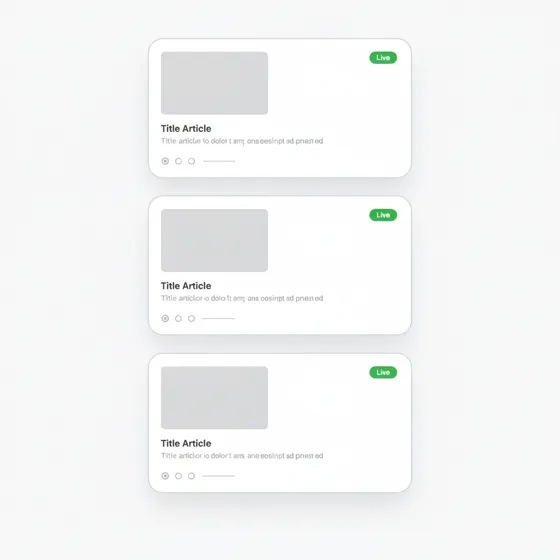
GrandRanker connects directly to WordPress, Webflow, Shopify, and custom API endpoints for automatic publishing. Content flows from the editor to your live site with proper formatting, meta tags, and schema markup — no manual CMS work needed. SEO.ai requires manual content transfer regardless of which plan you are on.

GrandRanker one-click CMS publishing

Automated Internal Linking

Every new article is analyzed against your full site map. GrandRanker inserts contextual internal links into new content and retroactively updates older posts to point to new pages. This builds topical authority and improves crawlability automatically — a capability SEO.ai does not offer at any tier.

GrandRanker keyword research

Content Refresh and Decay Detection

GrandRanker monitors your published content for ranking drops and content staleness. When an article starts losing positions, the platform flags it and can regenerate or update sections to restore performance. SEO.ai focuses exclusively on new content creation without tools for maintaining existing articles.


Bulk Scheduling and Production Pipeline

Queue dozens of articles for automated generation, optimization, and publishing on a schedule that matches your content calendar. GrandRanker handles the full pipeline from keyword input to live page at scale. SEO.ai treats each article as an isolated task without scheduling or batch processing capabilities.


End-to-End Content Pipeline

Feed GrandRanker a keyword and it handles competitive research, article generation, NLP optimization, internal linking, and CMS publishing in one automated flow. With SEO.ai, you get excellent content optimization but still need to manage the publishing, linking, and distribution steps yourself.


Integrated Performance Tracking

Monitor how published articles perform in search results directly inside GrandRanker. Track keyword rankings, impressions, and organic traffic trends without switching to a separate analytics tool. This closed feedback loop helps you identify what is working and refine your content strategy based on real data.

When SEO.ai Might Be a Better Fit

No tool is perfect for everyone. Here is where SEO.ai has an edge.

Vendor
SEO.ai
Founded
2022
Pricing
From $49/mo
Best For
AI-powered content optimization and NLP analysis

SEO.ai is an AI-powered content optimization platform founded in 2022. It uses advanced natural language processing and semantic analysis to help content teams create articles that align with search engine ranking signals. The platform analyzes top-ranking pages for any given keyword and generates content recommendations based on NLP scoring, entity coverage, and topical depth. SEO.ai has built a reputation for its sophisticated approach to content optimization, using AI models trained specifically on search ranking patterns. The platform appeals to content marketers, SEO professionals, and digital agencies who want data-driven guidance on what to write and how to structure it for maximum search visibility. SEO.ai offers a tiered pricing model starting at $49/mo for its Basic plan, with higher tiers unlocking additional features like team collaboration and priority support.

Limited CMS Integrations

SEO.ai offers basic export options but lacks the deep CMS integrations needed for automated publishing workflows. Content created in the platform requires manual transfer to your CMS, including reformatting headings, configuring meta tags, uploading images, and setting up schema markup. For teams publishing more than a handful of articles per week, this manual step creates a persistent bottleneck.

No Internal Linking Engine

SEO.ai does not include any automated internal linking capabilities. After generating and optimizing content, you are responsible for manually identifying relevant pages on your site and inserting contextual internal links. This means one of the most impactful on-page SEO factors is left entirely to manual effort, which often gets deprioritized under production deadlines.

"We used to pay a content marketer. Now we just use GrandRanker. Takes like 10 min a day and honestly the output is better."

Viktor Novak

Switched from SEO.ai

"10 years in SEO and GrandRanker still caught me off guard. Now running it across all my client sites. The automation is incredible."

Priya Kapoor

SEO Consultant, 10+ years

2,000+ active users850K+ articles published4.9/5 avg rating

Pricing Comparison

SEO.ai

Basic$49/mo
  • AI content generation with NLP scoring
  • Semantic analysis for target keywords
  • Limited monthly content credits
  • Single user access
  • No CMS integrations or internal linking
Plus$99/mo
  • Higher content generation limits
  • Advanced NLP optimization features
  • Priority content processing
  • Team collaboration (limited seats)
  • No CMS integrations or internal linking
EnterpriseCustom
  • Unlimited content generation
  • Custom AI model tuning
  • Dedicated account management
  • API access for custom workflows
  • No auto-publishing or internal linking

GrandRanker

Recommended
GrandRanker$49/mo
  • Unlimited AI-generated articles
  • NLP optimization on every article
  • Auto-publish to WordPress, Webflow, Shopify, and more
  • Automatic internal linking across your site
  • Content refresh and decay detection
  • Bulk scheduling and multi-site management
  • Keyword research and clustering included
  • No credit limits or feature gates

Both GrandRanker and SEO.ai start at $49/mo, but the value you get at that price point differs significantly. SEO.ai's Basic plan provides strong NLP analysis and AI content generation with credit limits. To unlock higher limits and team features, you need the Plus plan at $99/mo or the Enterprise tier at custom pricing. Even at the highest tier, SEO.ai does not include auto-publishing or internal linking. GrandRanker's single $49/mo plan includes every feature — unlimited articles, NLP optimization, auto-publishing, internal linking, content refresh, and bulk scheduling. If your primary need is deep NLP scoring and you work within moderate content volumes, SEO.ai's Basic plan is competitive. But if you need a complete content pipeline from keyword research to published page, GrandRanker delivers substantially more at the same entry price.

Two AI-First Platforms With Different Definitions of Complete

GrandRanker and SEO.ai share a fundamental philosophy: artificial intelligence should drive content creation and optimization for search engines. Both platforms were built from the ground up around AI models rather than bolting machine learning onto legacy SEO tools. This shared DNA means both produce high-quality, search-optimized content that reflects current ranking signals and user intent patterns. Where they diverge is in how they define the boundaries of their platform.

SEO.ai has earned its reputation through genuinely impressive NLP capabilities. The platform's semantic analysis engine goes beyond simple keyword density to evaluate entity coverage, topical completeness, and the linguistic patterns that correlate with top-ranking pages. When you write content in SEO.ai, the real-time NLP scoring gives you granular feedback on how well your article covers the semantic territory that search engines expect. For content strategists and writers who care deeply about the optimization layer, this level of analysis is valuable and well-executed. SEO.ai treats content optimization as a craft that benefits from detailed, actionable scoring.

GrandRanker approaches the same optimization challenge with comparable AI depth but extends the platform boundary further downstream. Beyond generating and optimizing content, GrandRanker handles CMS publishing, internal linking, content refresh scheduling, and performance tracking. The philosophy is that content optimization only delivers ROI when the article actually reaches your website, gets properly linked into your site architecture, and stays current as the competitive landscape shifts. Both platforms produce excellent optimized content. The difference is that GrandRanker treats publishing and maintenance as first-class features rather than external concerns.

Neither approach is inherently wrong. If you have a mature publishing workflow and your bottleneck is specifically in content quality and optimization depth, SEO.ai's focused approach means every engineering resource goes toward making the NLP layer better. If your bottleneck spans the entire pipeline from keyword to live page, GrandRanker's broader scope eliminates more friction points. The right choice depends on where your content operations actually break down.

The Internal Linking Advantage That Compounds Over Time

Internal linking is one of the most impactful and most neglected aspects of on-page SEO. Every SEO professional knows that a strong internal linking structure helps search engines understand site hierarchy, distributes page authority, and improves crawl efficiency. Yet in practice, internal linking is the task that consistently falls to the bottom of the priority list because it requires tedious manual work: reviewing your existing content library, identifying semantically relevant pages, finding natural anchor text opportunities, and inserting links without disrupting the reading experience.

SEO.ai does not address internal linking at all. The platform focuses on what happens inside the content editor — generating text, optimizing for NLP signals, and ensuring topical coverage. Once the article leaves the editor, the user is responsible for everything else, including building the link connections that help that article rank. For teams publishing a few articles per month, manual internal linking is manageable. For teams producing content at scale, it becomes an operational gap that directly impacts search performance.

GrandRanker's internal linking engine works by maintaining a real-time map of your entire site's content. When a new article is generated and optimized, the platform analyzes it against every existing page to identify relevant linking opportunities. It inserts contextual internal links into the new article pointing to related existing content, and simultaneously updates older articles to link back to the new page. This bidirectional linking happens automatically with every piece of content you publish.

The compounding effect is what makes this feature transformative rather than merely convenient. After publishing 50 articles through GrandRanker, your site has a dense, contextually relevant internal linking structure that would have taken dozens of hours to build manually. After 200 articles, the internal link graph becomes a genuine competitive advantage that improves the ranking potential of every page on your site. SEO.ai users can certainly build internal links by hand, but the consistency and scale of automated linking produces a measurably different outcome over time.

Content Decay Is the Silent SEO Killer Both Platforms Handle Differently

Every piece of content you publish starts aging the moment it goes live. Competitors publish newer articles, search algorithms update their ranking criteria, and the information in your article becomes less current. Content decay — the gradual loss of rankings and traffic for previously successful articles — affects every website that has been publishing content for more than a few months. Studies consistently show that 30 to 50 percent of a site's published content is underperforming relative to its initial ranking peak at any given time.

SEO.ai is designed primarily for creating new content. The platform's NLP tools are excellent for optimizing a fresh article, but they do not provide a systematic way to identify which of your existing articles have decayed, prioritize them by recovery potential, or streamline the refresh process. If you want to update an older article, you would need to manually check rankings in a separate tool, bring the content back into SEO.ai for re-optimization, and then manually republish it to your CMS. Each step in that process creates friction that makes content refreshes easy to postpone.

GrandRanker takes a different approach by treating content maintenance as part of the core platform. The content refresh system monitors your published articles for ranking declines and flags pages that have lost positions or traffic. When an article is identified as decaying, GrandRanker can regenerate or update specific sections with current information, re-optimize the NLP scoring against the latest SERP landscape, update internal links to reflect your current content library, and republish the refreshed version directly to your CMS.

This distinction matters because content refresh is often the highest-ROI activity in content marketing. Updating an article that previously ranked on page one and has slipped to page two is typically faster and more reliable than creating an entirely new article from scratch. The existing page already has backlinks, indexing history, and user engagement signals. A well-executed refresh can restore its rankings within weeks. By building content decay detection and refresh workflows into the platform, GrandRanker ensures that maintaining your existing content library does not require a separate tool or a separate process. It happens alongside new content production as a natural part of the pipeline.

Frequently Asked Questions

Ready to Get More From Your AI SEO Platform?

Try the full GrandRanker pipeline — keyword research, AI content generation, NLP optimization, internal linking, content refresh, and auto-publishing to your CMS. See how a complete platform compares to optimization-only tools.

Buy Now

Cancel anytime.