Best GEO Tools Compared

Generative engine optimization is how brands get cited in ChatGPT, Perplexity, Gemini, and Google AI Overviews. Most GEO tools only measure your visibility. They tell you where you stand and stop there. We compared the leading platforms on what they track, what they actually fix, and which ones turn insight into published, citable content.

We built GrandRanker, so we are biased. But the feature comparison below uses verifiable facts.

The Best GEO Tools, Ranked

Rankings reflect how much of the GEO problem each tool actually solves, from monitoring AI visibility through producing and publishing the citable content that improves it. We list pricing, the single thing each tool does best, and the most common reason teams add something alongside it.

1

GrandRanker

Top pick

Best for: Creating and publishing GEO-optimized content that gets cited

GrandRanker is the only platform on this list that closes the loop. Instead of stopping at a visibility dashboard, it writes content engineered for generative engines, with concise answer blocks, clear entity relationships, FAQ structure, and schema, then publishes it directly to your CMS on a schedule. Every article is built to be extracted and cited by ChatGPT, Perplexity, Gemini, and Google AI Overviews, and to rank in traditional search at the same time. For teams whose goal is actually getting cited rather than just learning they are not, GrandRanker turns GEO from a report into published, citable pages.

Pricing
From $24/mo
Strength
Produces and auto-publishes citable, GEO-structured content end to end
Limitation
Focused on content GEO, not a standalone cross-engine rank monitor
Visit GrandRanker
2

Profound

Best for: Enterprise AI visibility analytics across engines

Profound is among the most established AI visibility platforms, tracking how brands appear across ChatGPT, Perplexity, Google AI Overviews, and more, with deep analytics on citations, sentiment, and the sources models rely on. It is powerful and enterprise-priced. As a monitor it is excellent, but it reports on visibility rather than producing the content that improves it, so teams pair it with a content workflow.

Pricing
Custom / enterprise
Strength
Deep, cross-engine AI visibility and citation analytics
Limitation
Monitoring only, enterprise pricing, no content creation
Read the full Profound comparison
3

Otterly.ai

Best for: Affordable AI search monitoring for SMBs

Otterly.ai tracks brand mentions, links, and sentiment across major AI search engines at a price accessible to small and mid-size teams. It is a clean, focused monitor for understanding your share of AI answers over time. Like other trackers, it surfaces the problem clearly but leaves the work of creating citable content and earning third-party mentions to you.

Pricing
From $29/mo
Strength
Accessible cross-engine monitoring with clear reporting
Limitation
Tracking only, no optimization or publishing
Read the full Otterly.ai comparison
4

Peec AI

Best for: Team-friendly AI visibility tracking and competitor benchmarking

Peec AI focuses on tracking your visibility in AI answers and benchmarking it against competitors, with a workflow built for marketing teams. The competitive view is a genuine strength for understanding where you stand in a category. It remains a measurement tool, so the gains it reveals still depend on a separate content and digital-PR effort to capture.

Pricing
From $90/mo
Strength
Competitor benchmarking for AI search visibility
Limitation
Analytics-focused, no content generation or publishing
Read the full Peec AI comparison
5

Scrunch AI

Best for: Brand presence management across AI platforms

Scrunch AI monitors how brands appear in AI answers and emphasizes managing brand perception and accuracy across engines. It is a useful lens for larger brands worried about how models describe them. The platform reports and alerts rather than produces optimized content, so it complements a creation tool rather than replacing one.

Pricing
Custom
Strength
Brand-perception monitoring across AI engines
Limitation
Monitoring and alerts, not a content or publishing engine
Read the full Scrunch AI comparison
6

Rankscale

Best for: Granular AI citation and source tracking

Rankscale tracks where your brand appears across AI engines and which sources get cited for your target prompts, with detail useful for diagnosing why competitors are surfaced over you. It is a strong diagnostic monitor. As with the others in this tier, acting on the diagnosis requires producing better-structured content and earning more authoritative mentions.

Pricing
Free tier; paid from ~$30/mo
Strength
Detailed citation and source-level diagnostics
Limitation
Diagnostic monitoring without a fix workflow
Read the full Rankscale comparison
7

Semrush AI Toolkit

Best for: Adding AI visibility to an existing Semrush stack

Semrush has layered AI visibility tracking onto its established SEO suite, letting teams monitor brand mentions in AI answers alongside traditional rank tracking. For existing Semrush customers it is a convenient add-on that keeps everything in one place. It is monitoring within a broader toolset rather than a dedicated GEO content engine.

Pricing
Add-on to Semrush plans
Strength
AI visibility inside a familiar all-purpose SEO suite
Limitation
Monitoring add-on, not a GEO content creation tool
Read the full Semrush AI Toolkit comparison
8

BrightEdge

Best for: Enterprise SEO platforms adding generative tracking

BrightEdge is a long-standing enterprise SEO platform that has added generative search insights, including tracking and recommendations for AI answer visibility. It fits large organizations already invested in its ecosystem. Pricing and scope are enterprise, and like other suites it centers on insight and recommendations rather than automated content production and publishing.

Pricing
Custom / enterprise
Strength
Enterprise-grade generative search insights at scale
Limitation
Enterprise pricing, recommendation-led rather than publishing
Read the full BrightEdge comparison

GEO Tools vs GrandRanker at a Glance

FeatureGEO ToolsGrandRanker
Tracks AI VisibilityYes, the core featureCompanion to creation
Writes GEO-Structured ContentNoAnswer blocks, entities, FAQ, schema
Concise Answer BlocksRecommends at bestBuilt into every article
Schema / Structured DataRarely generatedAuto-added per article
Publishes to Your CMSNoWordPress, Webflow, Shopify, Wix, Framer
Internal LinkingNoAutomatic across your site
Traditional SEO + GEO TogetherGEO-only focusBoth in one article
Content Freshness on ScheduleNot addressedScheduled auto-publishing
Entry PricingOften $90–$1,000+/mo$24/mo all-in
Starting PriceFree–$1,000+/mo$24/mo

Where GrandRanker Pulls Ahead

Citable by Design

Every article leads with concise, extractable answers and clear entity relationships, the structure AI engines pull from when they cite a source.

GrandRanker one-click CMS publishing

Built for Every Engine

Content is structured for ChatGPT, Perplexity, Gemini, and Google AI Overviews at once, not optimized for a single platform.

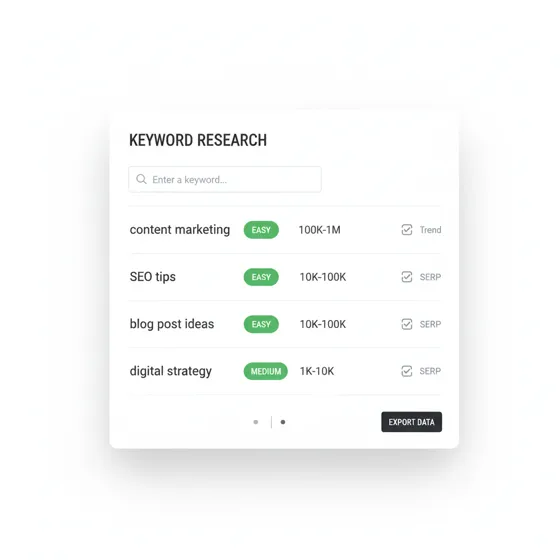
GrandRanker keyword research

GEO and SEO Together

The same article is engineered to be cited in AI answers and to rank in traditional search, so you capture both channels as discovery shifts.


Automatic Internal Linking

New content links into your existing pages automatically, building the topical authority that makes AI engines trust and cite your site.


Published, Not Just Recommended

GEO advice is worthless until it ships. GrandRanker publishes finished, optimized articles to your CMS on schedule, no manual execution step.


Fresh on a Schedule

AI engines favor current sources. Scheduled publishing keeps a steady stream of fresh, citable content flowing without manual upkeep.

When GEO Tools Might Be a Better Fit

No tool is perfect for everyone. Here is where GEO Tools has an edge.

Vendor
GEO Tools
Pricing
Free–$1,000+/mo
Best For
Brands that want to be cited in AI answers, not just measured

As AI answer engines take a growing share of search, a new category of GEO tools has appeared almost overnight. Most are monitors: they run prompts across ChatGPT, Perplexity, Gemini, and Google AI Overviews, then report how often your brand is mentioned, where you rank in AI answers, and which sources the models cite. That visibility is genuinely useful, but a dashboard does not change your standing. Getting cited requires producing content structured the way AI engines extract answers, earning mentions across the sources models trust, and keeping that content fresh. GrandRanker sits apart from the pure trackers: it optimizes and publishes GEO-ready content on autopilot, so the insight becomes citations rather than a report you read and file away.

Measurement Is Not a Fix

Almost every GEO tool is a monitor. It tells you how often you are mentioned and which sources get cited, which is valuable, but a dashboard does not write a single citable sentence. Knowing you are invisible in ChatGPT does not change it. The improvement comes from content and mentions, not from the report.

Content Still Lands on You

The recommendations these tools produce, add answer blocks, cover this entity, earn mentions here, all become a manual to-do list. Someone still has to write the GEO-structured articles, add schema, and publish them. That execution gap is exactly where most GEO efforts stall.

"We used to pay a content marketer. Now we just use GrandRanker. Takes like 10 min a day and honestly the output is better."

Viktor Novak

Switched from GEO Tools

"10 years in SEO and GrandRanker still caught me off guard. Now running it across all my client sites. The automation is incredible."

Priya Kapoor

SEO Consultant, 10+ years

2,000+ active users843K+ articles published4.9/5 avg rating

Pricing Comparison

Typical GEO Setup

AI Visibility Monitor$90–$300/mo
  • Cross-engine mention tracking
  • Citation and sentiment analytics
  • Competitor benchmarking
  • No content creation
Content Production$200–$500 per article
  • Manually write GEO-structured posts
  • Add schema and answer blocks
  • Build internal links by hand
  • Publish and keep fresh yourself

GrandRanker

Recommended
GrandRanker GEO Content$24/mo
  • GEO-structured articles with answer blocks
  • Entity-aware writing for AI extraction
  • FAQ structure and schema on every post
  • Automatic internal linking
  • Optimized for ChatGPT, Perplexity, Gemini, AI Overviews
  • Ranks in traditional search at the same time
  • Scheduled auto-publishing to your CMS
  • Plagiarism and SEO/GEO scoring before publish

A GEO monitor plus manual content production easily runs into hundreds of dollars a month before you account for writing time. GrandRanker produces and publishes citable, GEO-structured content from $24/mo. Pair it with a dedicated monitor if you want detailed tracking, but the platform that actually creates the citations should be the foundation, not an afterthought.

What GEO Tools Actually Do (and Don’t)

Generative engine optimization is the practice of getting your brand and content surfaced and cited inside AI answer engines, the ChatGPT responses, Perplexity answers, Gemini summaries, and Google AI Overviews that increasingly sit between a searcher and the open web. As that shift has accelerated, a wave of GEO tools has arrived to help. Understanding what they do is the first step to choosing well, because the category is narrower than the marketing suggests.

The overwhelming majority of GEO tools are monitors. They run large sets of prompts across multiple engines on a schedule, then report how often your brand is mentioned, how you compare to competitors, what sentiment the models express, and which sources they cite when answering questions in your category. The best of these, Profound, Otterly, Peec, Scrunch, Rankscale, are genuinely useful for the same reason rank trackers are useful in classic SEO: you cannot manage what you cannot see, and AI answers are otherwise a black box.

What these tools do not do is change your standing. A monitor can tell you that ChatGPT never mentions you and that a competitor is cited because of a well-structured comparison page and a strong Reddit presence. It cannot write that comparison page, add the schema, or earn the mentions. That work, the actual optimization, lands back on your team as a to-do list. This is the central gap in the GEO category in 2026: abundant measurement, scarce execution.

So the practical question is not only which monitor is most accurate, but how the insight becomes citations. For teams that want to act rather than just observe, the most important tool is the one that produces and publishes citable content. A monitor then becomes a way to prove the lift, not the engine that creates it.

How AI Engines Decide What to Cite

Choosing a GEO tool is easier once you understand what actually drives citations, because it tells you which capabilities matter. Independent analyses of large volumes of AI citations point to a consistent set of factors, and almost all of them are about content and authority rather than dashboards.

The first is extractable structure. Pages that lead with a concise, self-contained answer, then expand, get cited far more often than pages that bury the point. A large share of citations comes from the opening portion of a page, and content framed as direct answers, lists, tables, and FAQ sections is pulled disproportionately. This is something you build into the writing, not something a tracker can add.

The second is entity clarity and topical authority. AI models cite sources they can confidently associate with a topic. That association is built through consistent, interlinked content that covers a subject comprehensively, which is why automatic internal linking and cluster coverage matter for GEO, not just classic SEO. The third is off-site consensus: models lean on sources that agree with each other, so mentions across review sites, communities, and the wider web reinforce whether you get cited. The fourth is freshness, since engines favor current information and citation rates decay as content ages.

Read that list back and the implication for tool choice is clear. The factors that decide citations, answer structure, schema, entity coverage, internal linking, freshness, are produced by a content engine, while monitors only observe the result. The strongest GEO setup therefore pairs a creation platform that builds these signals into every article with, optionally, a monitor to verify progress. GrandRanker is built to produce exactly those signals on autopilot, which is why it anchors this list rather than sitting among the trackers.
Frequently Asked Questions

Get Cited, Not Just Measured

Monitors tell you that you are invisible in AI answers. GrandRanker fixes it, producing and publishing GEO-structured content built to be cited by ChatGPT, Perplexity, Gemini, and Google AI Overviews, from $24/mo.

Buy Now

Cancel anytime.