

7 Best Semrush Alternatives for Small Teams in 2026

Semrush is powerful, but at $129.95/mo with a steep learning curve, it is overkill for most small teams. These seven alternatives deliver the SEO features you actually use at a fraction of the cost and complexity.

We built GrandRanker, so we are biased. But the feature comparison below uses verifiable facts.

Our pick: Depends

GrandRanker wins for small teams who only need keyword research, AI content creation, and publishing for $49/mo. Semrush wins for agencies and enterprise SEO teams that need backlink analysis, PPC research, site audits at scale, and integrated social tools — and can absorb $250+/mo.

Semrush vs GrandRanker at a Glance

FeatureSemrushGrandRanker
AI Content Generation
Keyword Research
Site Audit
Rank Tracking500 keywords (Pro)Unlimited
Backlink AnalysisBasic
Content Optimization ScoreAdd-onBuilt-in
Internal Linking Automation
Auto-Publish to CMSWordPress & more
Bulk Article GenerationUp to 50 at once
Competitor SERP Analysis
PPC & Ads Research
Social Media Tools
User Seats Included1 (Pro)Unlimited
Starting Price$129.95/mo$49/mo
Starting PriceFrom $129.95/mo$24/mo

Where GrandRanker Pulls Ahead

AI Content Generation Built In

GrandRanker generates fully optimized, publish-ready articles from a target keyword. No need to hire writers or bolt on a separate AI tool. Every article is NLP-optimized during generation, not after.

GrandRanker one-click CMS publishing

63% Lower Starting Cost

At $49/mo versus $129.95/mo, GrandRanker saves your team over $970 per year on the subscription alone. Factor in eliminated writer costs and tool sprawl, and the savings grow substantially larger.

GrandRanker keyword research

Focused Keyword Research

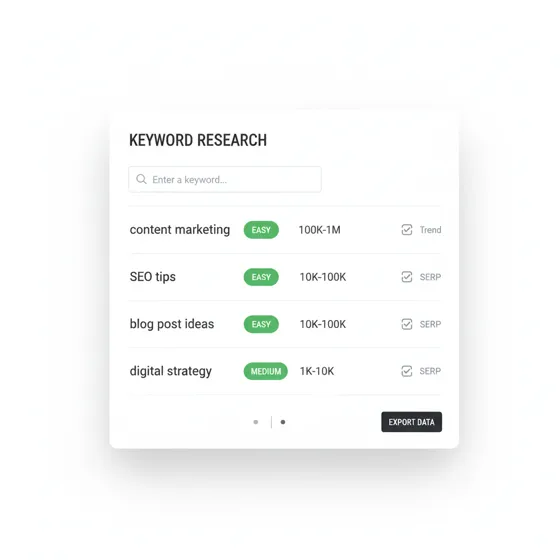
GrandRanker provides keyword volume, difficulty, and intent data without burying you in 55 separate dashboards. You get the research data you need to make content decisions without the enterprise complexity.


Automatic Internal Linking

Every generated article is automatically woven into your existing site architecture with contextually relevant internal links. Semrush offers site audit recommendations but does not build the links for you.


One-Click CMS Publishing

Push finished articles directly to WordPress and other CMS platforms with metadata, formatting, and internal links intact. Semrush has no publishing workflow — you still copy and paste.


No Per-Seat Charges

GrandRanker includes unlimited user seats at no extra cost. Your entire team can access the platform without the $45/seat surcharges that make Semrush expensive for collaborative teams.

When Semrush Might Be a Better Fit

No tool is perfect for everyone. Here is where Semrush has an edge.

Vendor
Semrush
Founded
2008
Pricing
From $129.95/mo
Best For
Enterprise SEO suite

Semrush is an enterprise-grade SEO and digital marketing platform founded in 2008. It offers an extensive toolkit spanning keyword research, site audits, backlink analysis, rank tracking, competitor intelligence, PPC research, social media scheduling, and content marketing workflows. With over 10 million users and a public listing on the NYSE, Semrush has become the default recommendation in many SEO circles. However, its breadth comes at a cost. The Pro plan starts at $129.95/mo with strict usage limits, the interface presents hundreds of features that most small teams never touch, and the platform lacks built-in AI content generation. For small teams and solo operators who need to research keywords, create optimized content, and publish it efficiently, Semrush often delivers far more tool than the job requires.

Prohibitive Pricing for Small Teams

The Pro plan costs $129.95/mo and limits you to 500 keywords to track, 10,000 results per report, and 5 projects. Hitting any of these caps forces you to the Guru plan at $249.95/mo. For a small team running one or two websites, you are paying enterprise prices for a fraction of the platform's capacity.

Steep Learning Curve

Semrush packs over 55 tools into its interface. New users face a maze of dashboards, reports, and configuration options that takes weeks to navigate confidently. Small teams without a dedicated SEO specialist waste significant time learning features they will never use instead of creating content that ranks.

"We used to pay a content marketer. Now we just use GrandRanker. Takes like 10 min a day and honestly the output is better."

Viktor Novak

Switched from Semrush

"10 years in SEO and GrandRanker still caught me off guard. Now running it across all my client sites. The automation is incredible."

Priya Kapoor

SEO Consultant, 10+ years

2,000+ active users843K+ articles published4.9/5 avg rating

Pricing Comparison

Semrush

Pro$129.95/mo
  • 5 projects
  • 500 keywords to track
  • 10,000 results per report
  • 1 user seat included
Guru$249.95/mo
  • 15 projects
  • 1,500 keywords to track
  • 30,000 results per report
  • Content Marketing toolkit
Business$499.95/mo
  • 40 projects
  • 5,000 keywords to track
  • 50,000 results per report
  • API access & white-label reports

GrandRanker

Recommended
Complete Plan$49/mo
  • Unlimited keyword research
  • AI content generation with optimization
  • Internal linking automation
  • Auto-publish to WordPress & more
  • SERP analysis & content audits
  • Bulk article generation
  • Unlimited user seats

Semrush Pro starts at $129.95/mo for a single user with strict project and keyword caps. Adding a second team member costs $45/mo extra, and unlocking the Content Marketing toolkit requires the $249.95/mo Guru plan. For a small team that primarily needs keyword research, content creation, and publishing, the realistic Semrush cost is $250-350/mo. GrandRanker delivers the core SEO content workflow — research, generation, optimization, internal linking, and CMS publishing — for a flat $49/mo with unlimited user seats.

The 7 Best Semrush Alternatives for Small Teams in 2026

Finding the right SEO tool as a small team means balancing capability against cost and complexity. Semrush is undeniably powerful, but its enterprise pricing and sprawling interface make it a poor fit for teams that need to move fast without a dedicated SEO department. Here are seven alternatives that deliver the features small teams actually use, at prices that make sense for tighter budgets.

1. GrandRanker ($49/mo) — The top pick for small teams that need an end-to-end content SEO workflow. GrandRanker combines keyword research, AI content generation, NLP optimization, automatic internal linking, and one-click CMS publishing in a single platform. Where Semrush stops at data and analysis, GrandRanker takes you from keyword to published article without leaving the dashboard. At $49/mo with unlimited user seats, it costs less than a third of Semrush Pro while covering the entire content production pipeline.

2. Ahrefs (from $129/mo) — The closest direct competitor to Semrush in terms of data depth. Ahrefs excels at backlink analysis, keyword research, and rank tracking with a cleaner interface than Semrush. However, it matches Semrush on price and still lacks built-in content generation or CMS publishing. Best for teams that prioritize link building and competitive analysis over content production.

3. Moz (from $49/mo) — A more approachable SEO platform with strong domain authority metrics and a beginner-friendly interface. Moz offers keyword research, rank tracking, and site crawling at a lower entry point than Semrush. The trade-off is smaller keyword databases and less granular competitive intelligence. Good for teams learning SEO fundamentals.

4. SE Ranking (from $65/mo) — A budget-friendly all-in-one SEO platform that covers keyword tracking, site audits, backlink monitoring, and competitor research. SE Ranking provides many of the same feature categories as Semrush at roughly half the price, though with less data depth on each. A solid middle ground for teams that need broad coverage without enterprise costs.

5. Ubersuggest (from $29/mo) — Neil Patel's SEO tool offers keyword research, site audits, and content ideas at the lowest price point on this list. The data is more limited than Semrush or Ahrefs, but for small teams focused on a single website, Ubersuggest provides enough insight to guide content strategy without overwhelming the budget.

6. Mangools (from $49/mo) — A suite of five focused SEO tools covering keyword research (KWFinder), SERP analysis, rank tracking, backlink analysis, and site profiling. Mangools is popular with beginners and small teams for its clean, intuitive design and transparent pricing. It lacks the depth of Semrush for technical audits but covers the essentials well.

7. Serpstat (from $59/mo) — A growth hacking tool that bundles keyword research, rank tracking, site audit, backlink analysis, and competitor research. Serpstat offers competitive pricing with a focus on simplicity and is particularly popular among European SEO teams. The platform provides solid fundamentals without the feature bloat that makes Semrush intimidating for smaller operations.

Why Small Teams Are Leaving Semrush in 2026

The exodus of small teams from Semrush is not about the platform being bad — it is about the platform being wrong for their size and workflow. Two factors drive most departures: price and complexity.

On price, Semrush has positioned itself firmly in the enterprise tier. The Pro plan at $129.95/mo sounds manageable until you discover the limits: five projects, 500 tracked keywords, and a single user seat. A three-person marketing team managing two websites needs at minimum the Guru plan ($249.95/mo) plus two additional seats ($90/mo), bringing the monthly total to roughly $340 before tax. For a startup or small business, that is a significant chunk of the marketing budget spent on a tool rather than on activities that directly produce traffic.

The complexity issue compounds the cost problem. Semrush has grown through acquisition and feature expansion for over fifteen years. The platform now contains tools for SEO, PPC, social media, content marketing, competitor intelligence, and local SEO. Each tool has its own dashboard, its own reports, and its own learning curve. A small team that primarily needs keyword research and content creation ends up navigating past dozens of features they will never use, which slows onboarding and creates decision paralysis.

The emergence of AI-powered content tools has further widened this gap. Small teams in 2026 expect their SEO platform to not just tell them what to write but to help them write it. Semrush's content marketing toolkit provides topic research and writing guidelines, but stops short of generating actual articles. Teams that adopted GrandRanker, Frase, or similar AI-forward tools discovered they could go from keyword to published article in minutes rather than hours — and for far less money.

There is also the workflow fragmentation issue. Even if you stay on Semrush for research and auditing, you still need a separate writing tool, a separate publishing workflow, and manual internal linking. Each seam between tools introduces friction, errors, and time loss. Small teams cannot afford that overhead, which is why integrated platforms that cover the full content lifecycle are gaining ground rapidly.

How to Choose the Right Semrush Alternative for Your Team

Choosing the right Semrush alternative starts with an honest assessment of what your team actually does versus what Semrush offers. Most small teams use fewer than ten of Semrush's 55+ features regularly. Identifying which ten features matter to you narrows the field dramatically.

If your primary workflow is keyword research followed by content creation and publishing, GrandRanker is the strongest choice. It is the only tool on this list that covers the entire pipeline from research through AI-generated, optimized, internally-linked, CMS-published articles. The $49/mo price point with unlimited seats makes it particularly attractive for teams where multiple people contribute to content production.

If backlink analysis and competitive link intelligence are central to your strategy, Ahrefs remains the industry standard. Its backlink index is the largest available, and its competitive analysis tools are genuinely best-in-class. However, you will pay Semrush-level prices and still need separate tools for content creation and publishing.

If you are brand new to SEO and need a gentle learning curve, Moz or Mangools offer friendly interfaces with enough capability to guide a content strategy. Both are significantly easier to learn than Semrush, though neither includes AI content generation.

Budget is often the deciding factor for small teams. Map out your full tool cost, not just the subscription price. A $130/mo Semrush subscription that requires a $50/mo AI writer, a $20/mo linking tool, and five hours of manual publishing labor each month is really costing you $200+ in tools and significant time. A $49/mo tool that handles the entire workflow represents a genuine 75% cost reduction when you account for the full picture.

Finally, consider your growth trajectory. If your team will scale to 20+ people managing dozens of domains with complex PPC campaigns, Semrush's breadth may eventually justify its cost. But most small teams benefit from starting with a focused, affordable tool that helps them produce results today, and evaluating whether they need enterprise-grade analytics later. You can always upgrade to a larger platform when your traffic and revenue justify the expense — there is no advantage to paying for enterprise tools before you have enterprise problems.

Frequently Asked Questions

Get the SEO Features You Actually Use for $49/mo

GrandRanker gives small teams keyword research, AI content generation, NLP optimization, internal linking, and one-click CMS publishing — no enterprise pricing, no per-seat charges, no feature overload.

Buy Now

Cancel anytime.