Key Takeaways
- Quick Comparison: 7 SearchAtlas Alternatives for Content Managers
- GrandRanker vs SearchAtlas: Which Automation Fits Your Team?How GrandRanker Handles Content on AutopilotWhere SearchAtlas Still Has an Edge
- How GrandRanker Handles Content: How GrandRanker Handles Content on Autopilot
- Where SearchAtlas Still Has: Where SearchAtlas Still Has an Edge
- GrandRanker: AI SEO Automation Platforms Built for Content ManagersPros and Cons of GrandRanker
- Pros and Cons of: Pros and Cons of GrandRanker
Quick Comparison: 7 SearchAtlas Alternatives for Content Managers
SearchAtlas alternative shopping starts with one hard truth: most content managers don't need more features, they need fewer tools that fit how their team actually ships content. The all-in-one suite pitch sounds efficient until you're paying for modules nobody opens. That's why the search for a searchatlas alternative for content managers keeps growing, especially among lean SaaS teams and SMB marketing departments that measure success in published pages, not dashboard tabs.
This guide from GrandRanker breaks down seven platforms worth evaluating in 2026, from full automation suites to specialized point tools. Below, we'll show you exactly which option fits which workflow, so you can stop trialing and start publishing.
Here's the landscape at a glance:
| Tool | Starting Price | Free Trial | Local SEO | Content Automation | Best For |
|---|---|---|---|---|---|
| GrandRanker | Free trial available | Yes | No | Yes, full autopilot | Content managers who want hands-off SEO |
| Semrush | $139.95/month | Yes | Limited | Partial | Broad marketing teams |
| Ahrefs | $99/month | No | No | No | Backlink research |
| SE Ranking | $55/month | No | Yes | No | Budget-conscious teams |
| Moz Pro | $99/month | No | No | No | Reporting and audits |
| BrightLocal | $39/month | No | Yes | No | Multi-location local SEO |
| Similarweb | Contact for pricing | Yes | No | No | Competitor benchmarking |
GrandRanker vs SearchAtlas: Which Automation Fits Your Team?
For content managers who want SEO to run without daily babysitting, GrandRanker is the stronger pick. SearchAtlas bundles a wide function set, but that breadth is exactly what drives teams to look elsewhere when the cost-to-value ratio stops making sense for smaller projects, a pattern practitioners discuss openly in SEO communities.
How GrandRanker Handles Content on Autopilot
GrandRanker is an AI-powered SEO platform that automates keyword research, content creation, optimization, and publishing in one workflow. Instead of stitching together a keyword tool, a content editor, and a rank tracker, content managers set direction once and let the system find opportunities, draft and optimize pages, and push them live. The platform is also built to get your content cited by AI assistants, not just ranked on Google, which matters as more buyers start their research in ChatGPT and similar tools.
Where SearchAtlas Still Has an Edge
SearchAtlas earns its reputation as an all-in-one suite, and teams that want every technical SEO function under one login will find plenty to use. The trade-off is cost and complexity. If your team publishes a steady stream of content and needs automation more than an exhaustive toolkit, the extra modules rarely justify the spend.
GrandRanker: AI SEO Automation Platforms Built for Content Managers
GrandRanker sits in the category of AI SEO automation platforms designed around one job: getting content published and ranking without a full-time operator. That focus is why it leads this list.
Pros and Cons of GrandRanker
Pros:
- Automated keyword research feeds directly into content creation
- Content on Autopilot handles drafting, optimization, and publishing
- Built to earn citations from AI assistants, not just search rankings
- Free trial available, so you can test the workflow before committing
Cons:
- Not a local SEO or citation-management tool, so multi-location businesses need a specialist for that
- Teams that want manual control over every draft may find the automation too hands-off
Semrush: Broad Toolkit for Content and PPC Teams
Semrush is the widest-ranging platform on this list, covering SEO, PPC, social, and competitor research in one subscription (SEO & AI Search Plans and Pricing). If your content manager also supports paid campaigns, that breadth is genuinely useful, and the keyword and domain databases are among the largest available.
The catch is price. Semrush is a comprehensive option, and smaller teams often pay for modules they never touch. Its content automation is partial at best: you get a writing assistant and topic research, but the publishing workflow stays manual.
Pros: industry-leading database size; extensive integrated toolset. Cons: high price point for small businesses; automation stops short of hands-off publishing.
Ahrefs: Best for Backlink Research and Content Discovery
Ahrefs remains the reference point for backlink data and competitive analysis (Site Explorer by Ahrefs: The #1 Competitor Analysis Tool). Its Site Explorer and Keywords Explorer give content managers a clear picture of what competitors rank for and which pages earn links, and Content Explorer surfaces proven topics before you commit to a brief.
What Ahrefs doesn't do is automate content production. There's no autopilot, no publishing workflow, and no free trial. For a content manager whose bottleneck is link building and topic discovery, it's excellent. For one drowning in drafting and optimization work, it solves the wrong problem.
Pros: best-in-class backlink index; intuitive interface. Cons: no free trial; no content automation.
SE Ranking: Budget-Friendly All-in-One for Small Teams
SE Ranking is the value pick. It covers rank tracking, on-page checks, backlink monitoring, and white-label reporting without the enterprise price tag, which makes it a reasonable fit for small in-house teams and agencies managing several clients.
The trade-off is depth. Data granularity won't match Semrush or Ahrefs, and like most tools here, it tracks and audits content rather than producing it. If your team writes and publishes manually and just needs reliable measurement, SE Ranking covers the basics well.
Pros: flexible pricing; user-friendly interface. Cons: less data depth than enterprise tools; no content automation.
Moz Pro: Trusted Metrics for Reporting and Site Audits
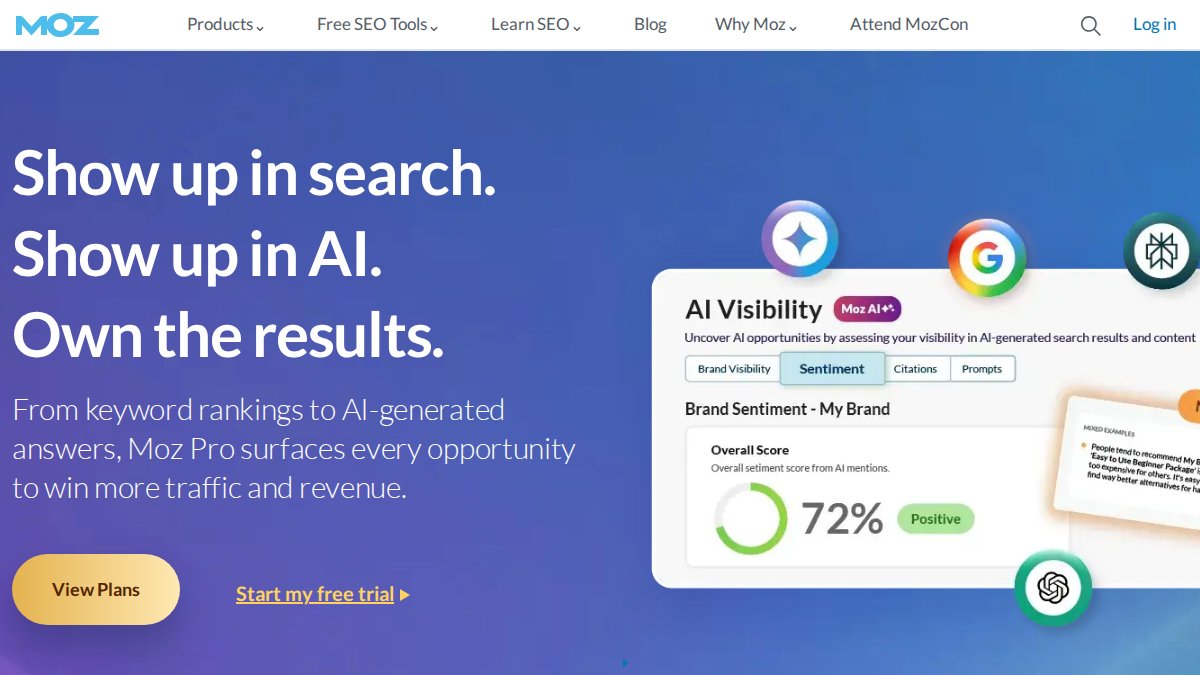
Moz Pro still owns one thing every content manager needs: Domain Authority. If your reporting leans on DA as a benchmark, Moz keeps that metric in-house along with Site Crawl, Keyword Explorer, and custom reporting.
Where it falls short is pace. The interface feels dated next to newer platforms, and there's no automation layer for content production. Moz is a solid measurement and audit tool, not a publishing engine.
Pros: trusted industry metrics; strong educational resources. Cons: dated interface; no content automation.
BrightLocal: Local SEO and Citation Management Specialist
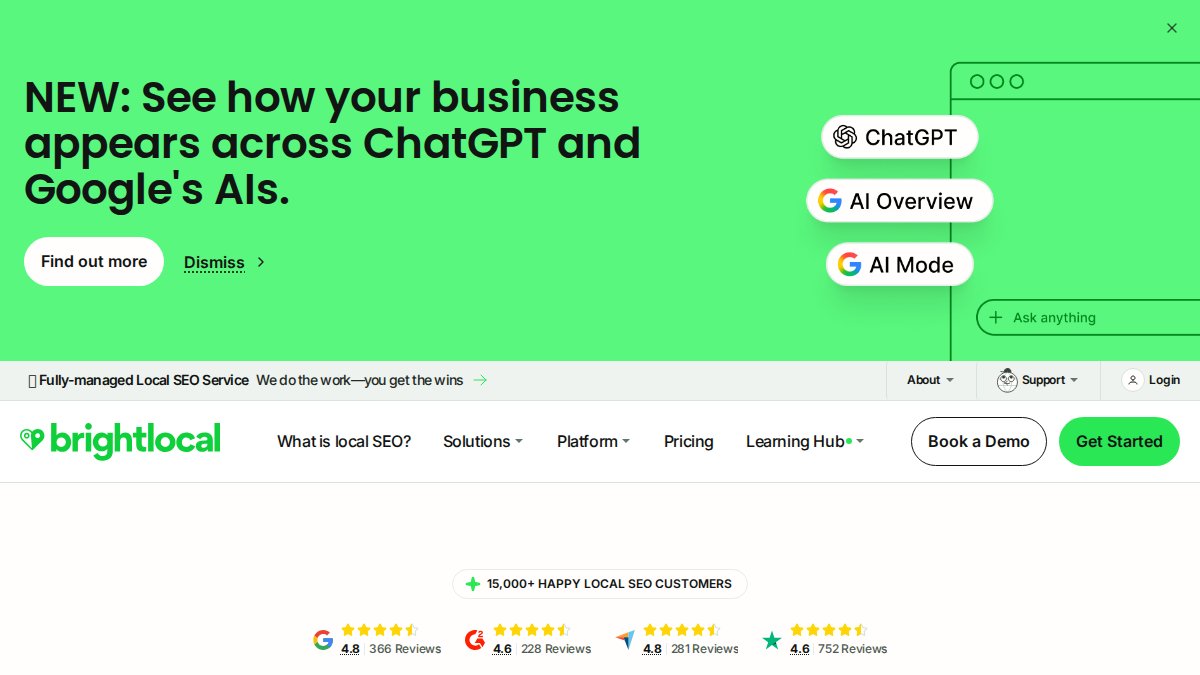
BrightLocal does one job exceptionally well: local search visibility. It tracks rankings in Google Maps and local results, builds and manages citations, and monitors reviews, which makes it the strongest option here for businesses managing multiple locations (Localized Google Results from Any Location).
It is not a general organic SEO platform. There's no content workflow, no keyword-to-publish automation, and it's priced for its niche. If your content manager runs local campaigns alongside a broader SEO program, BrightLocal complements a platform like GrandRanker rather than replacing it.
Pros: best-in-class local search tools; strong reputation management. Cons: not built for general organic SEO strategy.
Similarweb: Competitor Traffic Intelligence
Similarweb answers a different question than the rest: where does your competitor's traffic actually come from? Its traffic-source analysis, audience insights, and keyword gap data make it useful for high-level strategy and benchmarking before you commit content budget.
It's a research tool, not a production one. Pricing requires contacting sales, and it typically makes sense for content managers at larger organizations doing market-level planning rather than day-to-day publishing.
Pros: unmatched competitor traffic data; strong for strategy planning. Cons: expensive for small teams; no content or SEO workflow features.
Ready to dominate search results?
Join 8020+ businesses using GrandRanker to track rankings, fix SEO issues, and grow organic traffic.
Buy NowFrequently Asked Questions
For small content teams, SE Ranking offers rank tracking, on-page checks, and white-label reports. GrandRanker offers a free trial and focuses on AI SEO automation, making it useful for teams without dedicated SEO staff. BrightLocal is an option if local search is your priority. Semrush and Ahrefs provide deeper data. The right choice depends on whether you need broad analytics or automated content workflows.
GrandRanker focuses on end-to-end AI SEO automation, covering keyword research, content creation, optimization, and publishing. It also aims to get your brand cited by AI assistants like ChatGPT. SearchAtlas includes a Content Genius feature for editor-first workflows. If your team wants less manual input, GrandRanker's autopilot approach may reduce hands-on work. If you prefer editing drafts heavily, a tool with stronger editorial controls could suit you better.
SEO platforms help improve domain authority by identifying high-value keywords, suggesting internal links, tracking backlinks, and auditing technical issues. Tools like Ahrefs and Moz Pro provide backlink data and domain metrics. GrandRanker automates content creation and optimization to build topical relevance over time. Consistent publishing of optimized content that earns links and citations is the main driver. No single tool guarantees higher authority; the workflow and consistency matter more.
Content managers should prioritize keyword research depth, content brief generation, on-page optimization suggestions, and rank tracking. Workflow automation features, such as automated publishing or AI-assisted drafting, save time. Reporting and ROI transparency matter for proving value to leadership. Also check integration with your CMS, pricing that fits your team size, and whether the tool handles your industry's specific terminology. A free trial helps you test these before committing.
Several tools offer free tiers or trials for keyword research. GrandRanker has a free trial and a free plan, letting you test AI-driven keyword discovery. Semrush and Similarweb offer limited free versions. Ahrefs provides a free Webmaster Tools option with basic data. Moz Pro does not have a free trial. Free tools typically limit daily queries or data depth, so compare limits before relying on them for ongoing work.
Continue Reading
More guides to level up your SEO strategy.