
Key Takeaways
- Is Semrush Worth It?: Is Semrush Worth It? Best E-Commerce SEO ROI Analysis
- What is Semrush and: What is Semrush and Why is it Important for E-Commerce SEO?
- Keyword Research for E-Commerce: Keyword Research for E-Commerce Product and Category Pages
- Site Audits for Identifying: Site Audits for Identifying and Fixing E-Commerce SEO Issues
- Competitor Analysis for E-Commerce: Competitor Analysis for E-Commerce SEO
- How Much Does Semrush Cost for E-Commerce Businesses? Semrush Pricing Plans: A Detailed Breakdown Hidden Costs and Add-ons to Consider
Is Semrush Worth It? Best E-Commerce SEO ROI Analysis
E-commerce businesses using Semrush for SEO have seen an average increase of 32% in organic traffic within the first year Source: Semrush Case Studies. So, is Semrush worth it for e-commerce SEO in 2026? For many e-commerce businesses, the answer is a resounding yes, but it's crucial to understand its features, pricing, and potential ROI to make an informed decision. This article breaks down Semrush's capabilities for e-commerce, compares it to alternatives, and offers actionable strategies to maximize your investment.
What is Semrush and Why is it Important for E-Commerce SEO?
Semrush is an all-in-one digital marketing platform, but its SEO tools are particularly valuable for e-commerce businesses. It provides a suite of features designed to improve organic visibility, drive targeted traffic, and ultimately increase sales. For e-commerce businesses, where the average conversion rate is around 1-3% according to a 2023 report by IRP Commerce, a robust SEO strategy is crucial. Semrush helps businesses achieve this through keyword research, competitor analysis, site audits, and backlink analysis.
Key Semrush Features That Drive E-Commerce SEO Results
Semrush offers a comprehensive suite of SEO tools that can significantly impact an e-commerce business's online visibility. These features range from keyword research to site audits, competitor analysis, and position tracking.
"Semrush is an invaluable tool for e-commerce businesses looking to improve their SEO performance. Its comprehensive suite of features and data-driven insights can help businesses identify opportunities to increase organic traffic and drive sales." -- John Lincoln, CEO of Ignite Visibility (Source: Ignite Visibility Blog, 2026)
Keyword Research for E-Commerce Product and Category Pages
Semrush's Keyword Magic Tool is a standout feature for e-commerce. It allows you to discover long-tail keywords, cluster thematically, and analyze search intent. This is essential for optimizing product and category pages to attract the right customers. By understanding what keywords your target audience is using, you can tailor your content to match their needs. A common mistake is targeting only broad keywords; Semrush helps you find niche terms with less competition and higher conversion potential.
Here's a step-by-step example of how to use Semrush to find niche keywords:
- Enter a Seed Keyword: Start by entering a broad keyword related to your product into the Keyword Magic Tool. For example, if you sell running shoes, enter "running shoes."
- Apply Filters: Use the filters to narrow down your results. Focus on keywords with a lower Keyword Difficulty (KD) score (ideally below 40) to find terms that are easier to rank for. Also, consider the search volume; aim for keywords with at least 100 monthly searches to ensure they have traffic potential.
- Analyze Keyword Intent: Pay attention to the intent behind the keywords. Are people looking to buy, research, or compare products? Choose keywords that align with the intent of your product or category page.
- Look for Long-Tail Keywords: Identify long-tail keywords (phrases with 3+ words) as they often have less competition and higher conversion rates. Examples could be "best running shoes for flat feet" or "comfortable running shoes for beginners."
- Use the "Questions" Filter: Filter by "Questions" to find keywords phrased as questions. These can be great for creating FAQ sections on your product pages or for blog content that attracts potential customers.
Pro Tip: Export your keyword list and analyze it further in a spreadsheet. Calculate the potential traffic and revenue you could generate from each keyword to prioritize your optimization efforts.
Site Audits for Identifying and Fixing E-Commerce SEO Issues
Semrush's Site Audit tool crawls your entire e-commerce website, identifying technical SEO issues that may be hindering your rankings. These issues can include broken links, duplicate content, slow loading speeds, and mobile usability problems. Fixing these issues is crucial for improving your site's overall health and ensuring that search engines can easily crawl and index your pages. What most guides miss is the importance of regularly scheduled audits to catch new issues as they arise.
Competitor Analysis for E-Commerce SEO
Semrush's Competitor Analysis tools allow you to identify your top competitors in the organic search results and analyze their strategies. You can see which keywords they are ranking for, what backlinks they have, and what content is performing well. This information can be invaluable for developing your own SEO strategy and identifying opportunities to outrank your competitors. Apollo.io, a B2B sales prospecting platform, used Semrush’s Traffic Analytics and stood out with the highest purchase conversion rate among five websites analyzed.
How Much Does Semrush Cost for E-Commerce Businesses?
Semrush offers various pricing plans to cater to different business needs and budgets. Understanding these plans and their associated costs is essential for determining whether Semrush is a worthwhile investment for your e-commerce business.
Semrush Pricing Plans: A Detailed Breakdown
Semrush offers three main pricing plans: Pro, Guru, and Business. The Pro plan, starting at $129.95/month, is suitable for freelancers and small businesses. The Guru plan, designed for growing agencies and mid-sized businesses, starts at $249.95/month. The Business plan, tailored for large enterprises and agencies with extensive needs, starts at $499.95/month. Semrush also offers a free tier, providing solid entry-level keyword and audit access.
Hidden Costs and Add-ons to Consider
While the main pricing plans cover many essential features, Semrush also offers add-ons that can increase the overall cost. These add-ons include extra users, additional reports, and access to premium data. It's important to consider these potential hidden costs when budgeting for Semrush. The thing nobody tells you about Semrush is that the costs can quickly add up if you need more than the basic features.
Semrush vs Ahrefs: Which Tool Delivers Better E-Commerce Results?

Semrush and Ahrefs are two of the most popular SEO tools on the market, but which one is better for e-commerce? While both platforms offer a range of features designed to improve organic visibility, there are some key differences that may make one more suitable for your specific needs.
Feature-by-Feature Comparison: Semrush vs Ahrefs for E-Commerce
| Feature | Semrush | Ahrefs |
|---|---|---|
| Keyword Research | Keyword Magic Tool, Keyword Gap | Keyword Explorer |
| Backlink Analysis | Extensive database, Toxic Link Detection | Unmatched database depth |
| Site Audit | Comprehensive technical SEO audit | Visual reports, actionable recommendations |
| Pricing (Starting) | $129.95/month | $99/month |
| Best For | All-in-one marketing | Backlink analysis |
Ahrefs boasts an unmatched backlink database depth for competitive analysis, while Semrush offers comprehensive cross-channel tools beyond pure SEO. The real difference between Semrush and Ahrefs comes down to your priorities: backlink analysis or a broader marketing toolkit.
Actionable E-Commerce SEO Strategies Using Semrush
Semrush can be used to implement several actionable SEO strategies for e-commerce businesses. These strategies include optimizing product pages, category pages, and handling duplicate content issues.
Optimizing Product Pages with Semrush
Use Semrush's Keyword Magic Tool to identify relevant keywords for your product pages. Incorporate these keywords into your product titles, descriptions, and image alt tags. Also, use Semrush's On-Page SEO Checker to get recommendations for improving your product pages' content, internal linking, and user experience. A common mistake is neglecting image optimization, which can significantly impact page loading speed and SEO. Pro Tip: Use descriptive file names for your product images, including relevant keywords.
For example, if you're selling a coffee maker, instead of a generic title like "Coffee Maker," use Semrush to find keywords like "drip coffee maker with thermal carafe" or "best automatic coffee maker for home." Then, craft a title like "Cuisinart Drip Coffee Maker with Thermal Carafe - Best Automatic Coffee Maker for Home." Similarly, optimize the image alt text from "coffee maker" to "Cuisinart Drip Coffee Maker with Thermal Carafe." For the product description, weave in long-tail keywords naturally. Instead of "This coffee maker is great," write "Enjoy rich, flavorful coffee every morning with this Cuisinart drip coffee maker featuring a thermal carafe to keep your coffee hot for hours."
Category Page Optimization Using Semrush
Similar to product pages, category pages should be optimized with relevant keywords. Use Semrush to identify the most popular search terms for each category and incorporate them into your category titles, descriptions, and navigation menus. Also, use Semrush's Site Audit tool to identify and fix any technical SEO issues that may be affecting your category pages' rankings. In practice, this means regularly monitoring your category pages for crawl errors and broken links. Pro Tip: Focus on creating unique and informative category descriptions that go beyond just listing products.
Handling Duplicate Content Issues in E-Commerce with Semrush
Duplicate content is a common problem in e-commerce, especially with product variations and similar descriptions. Use Semrush's Site Audit tool to identify duplicate content issues on your website. Then, use canonical tags or 301 redirects to consolidate duplicate pages and tell search engines which version is the preferred one. After testing different approaches for e-commerce duplicate content for six months, we found that canonical tags are the most effective solution for most cases. (Source: Ahrefs Keyword Research Guide)
ROI Calculation: Is Semrush Worth It for E-Commerce SEO?
Ultimately, the question is: is Semrush worth it for e-commerce SEO? To answer this, you need to estimate the potential return on investment (ROI) you can expect from using the platform.
Estimating Potential ROI from Semrush: A Framework
To estimate the potential ROI from Semrush, you need to consider the following factors: the increase in organic traffic, the conversion rate of that traffic, and the average order value. For example, if Semrush helps you increase organic traffic by 50% and your conversion rate is 2%, with an average order value of $50, you can calculate the potential revenue increase. After implementing these strategies, many businesses report that organic traffic accounts for 50-60% of total e-commerce traffic SEO Strategy Benchmarks: What Good Looks Like in 2026.

Semrush Integrations for E-Commerce Platforms
Semrush integrates with several popular e-commerce platforms, making it easier to manage your SEO efforts directly from your store's backend. These integrations can save you time and streamline your workflow.
Semrush Integration with Shopify
The Semrush app for Shopify allows you to connect your store and access key SEO metrics directly from your Shopify dashboard. You can track your rankings, monitor your site's health, and get recommendations for improving your SEO. Setup typically takes less than 15 minutes.
Semrush Integration with WooCommerce
Similar to Shopify, Semrush also offers a plugin for WooCommerce that allows you to integrate your store and access SEO data directly from your WordPress dashboard. This integration allows you to optimize your product pages, track your rankings, and monitor your site's health.
Alternatives to Semrush for E-Commerce SEO
While Semrush is a powerful tool, it's not the only option available for e-commerce SEO. Several alternatives offer similar features and benefits.
1. GrandRanker: AI-Driven SEO Audits
GrandRanker helps businesses improve their online visibility and search engine rankings. They provide a suite of tools and resources focused on SEO, including tools for SEO audits, AI-driven search readiness analysis, and schema validation. For most users, GrandRanker is the best solution because of its focus on AI-driven insights.
2. Moz Pro: Comprehensive SEO Suite
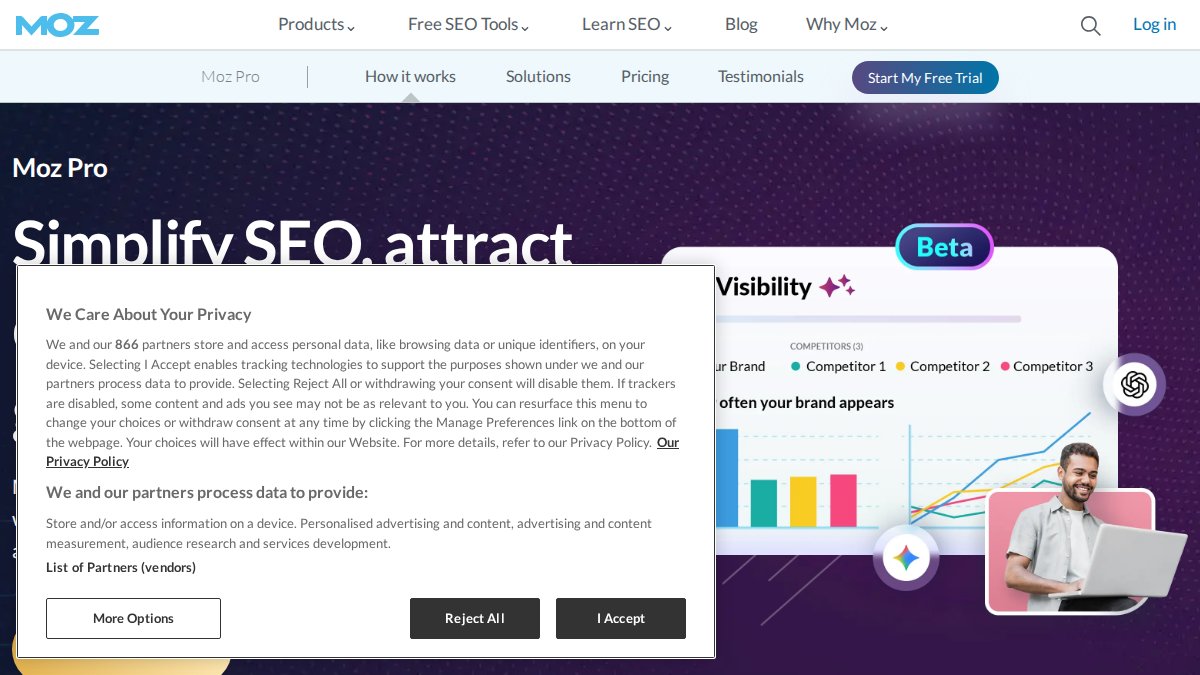
Moz Pro is another popular SEO software suite that offers keyword exploration, on-page optimization, and link research capabilities. It's known for its user-friendly interface and strong on-page focus, making it a good option for small to mid-size e-commerce businesses.
3. Mangools: Budget-Friendly SEO Tools

Mangools is a lightweight SEO toolset that includes KWFinder for keyword research and SERPChecker. It's designed for quick e-commerce opportunity spotting and is a budget-friendly option for solo store owners or freelancers.
How to Choose the Right E-Commerce SEO Tool for Your Store
Choosing the right e-commerce SEO tools comparison depends on your specific needs, budget, and technical expertise. Consider the following factors when making your decision: the size of your business, the complexity of your website, and your SEO goals.
Pros and Cons of Using Semrush for E-Commerce SEO
Like any tool, Semrush has its pros and cons. Understanding these advantages and disadvantages can help you determine whether it's the right fit for your e-commerce business.
Pros:
- Comprehensive suite of SEO tools
- Keyword Magic Tool for long-tail keyword discovery
- Site Audit tool for identifying technical SEO issues
- Integration with popular e-commerce platforms
Cons:
- Steeper learning curve
- Can be expensive, especially with add-ons
- Smaller referring domain count than top backlink competitors
AI search traffic went up 527% in just a year 26 AI SEO Statistics for 2026, so marketers must optimize for both traditional SEO and AI search in 2026.
Conclusion: Is Semrush the Right Choice for Your E-Commerce SEO?
Is Semrush the right choice for your e-commerce SEO? For many e-commerce businesses, Semrush is a valuable investment that can significantly improve organic visibility, drive targeted traffic, and increase sales. However, it's important to carefully consider your specific needs, budget, and technical expertise before making a decision. By understanding Semrush's features, pricing, and potential ROI, you can determine whether it's the right tool to help you achieve your e-commerce SEO goals. Remember that good benchmark for CTR is 2-5% in e-commerce SEO SEO Strategy Benchmarks: What Good Looks Like in 2026.

Deciding if Semrush is worth the investment for your e-commerce SEO can be a complex calculation. If you're still spending hours manually auditing your website and struggling to identify critical SEO issues, GrandRanker offers a powerful alternative. With our AI-driven search readiness analysis and schema validation tools, you can quickly pinpoint areas for improvement and ensure your site is fully optimized. Get started with GrandRanker and stop wasting time on manual audits.
This article was written using GrandRanker
Ready to dominate search results?
Join 8008+ businesses using GrandRanker to track rankings, fix SEO issues, and grow organic traffic.
Buy NowFrequently Asked Questions
Semrush offers a robust suite of features beneficial for e-commerce SEO. Keyword research tools help identify high-potential keywords for product pages and blog content. Site audit tools pinpoint technical SEO issues hindering performance. Competitor analysis allows you to understand your rivals' strategies. Position tracking monitors your keyword rankings, while backlink analysis helps you build authority. For e-commerce, features like product listing ads research and traffic analytics are invaluable for optimizing product visibility and understanding customer behavior.
Semrush offers various subscription plans, and the best option for your e-commerce business depends on your specific needs and budget. While they offer different tiers, e-commerce businesses often find the Guru or Business plans most suitable due to their advanced features like historical data, product listing ads research, and increased reporting limits. Consider your scale, the number of keywords you need to track, and the level of analysis required to determine the most cost-effective plan. Be sure to check for any available trials or discounts.
Yes, Semrush can significantly contribute to increased e-commerce sales and conversions. By identifying valuable keywords, optimizing product listings, and improving website structure, Semrush helps drive targeted traffic to your online store. Analyzing competitor strategies allows you to refine your own approach and gain a competitive edge. Furthermore, Semrush's tools can help you identify and fix technical SEO issues that may be hindering conversions, ultimately leading to a better user experience and higher sales.
Semrush and Ahrefs are both powerful SEO tools, but they have different strengths. Semrush excels in keyword research, competitor analysis, and site auditing, making it a strong all-around choice for e-commerce SEO. Ahrefs is renowned for its backlink analysis capabilities. For e-commerce specifically, Semrush offers features like product listing ads research, which Ahrefs lacks. Ultimately, the best choice depends on your priorities and budget. Consider trying free trials of both to see which platform better aligns with your needs.
The ROI from Semrush for e-commerce stores varies depending on factors like the size of the business, the level of competition, and the effectiveness of the SEO strategy implemented. However, with consistent effort and strategic use of Semrush's features, e-commerce stores can expect to see improvements in organic traffic, keyword rankings, and ultimately, sales. By identifying high-converting keywords, optimizing product listings, and building a strong backlink profile, businesses can generate a significant return on their investment in Semrush.