


Ubersuggest's Strengths: A Genuinely Good Budget Research Tool
It would be unfair to treat this comparison as a takedown of Ubersuggest. It is a genuinely good tool for what it is built to do, and understanding its real strengths is essential to making an honest decision about which tool fits your situation.
Ubersuggest's biggest strength is accessibility. Neil Patel built it to make SEO research affordable for people who could never justify $100-200+ per month for Ahrefs or Semrush. At $29/mo for the Individual plan — and especially through its lifetime deals — it puts keyword research, site audits, rank tracking, and backlink data within reach of solo bloggers, freelancers, small businesses, and beginners. For a huge segment of the market, that affordability is the difference between doing SEO research at all and doing none.
It is also beginner-friendly in a way that few SEO tools manage. The interface is clean, the keyword suggestions are easy to act on, and the tool is wrapped in one of the strongest education ecosystems in marketing. Neil Patel's blog, videos, and tutorials mean that a newcomer can learn both the concepts and the tool together, which lowers the barrier to entry significantly. The Chrome extension surfaces keyword and traffic data right in the browser, which is a genuinely useful workflow touch.
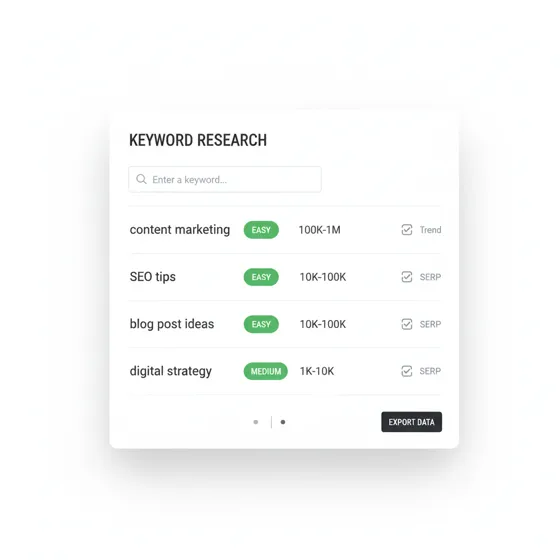
On capability, Ubersuggest covers the research fundamentals well. Keyword research with volume and difficulty, rank tracking, site audits that flag technical issues, and backlink data that is solid for its price tier — these are real features that deliver real value. It even includes a basic AI Writer for quick drafting. And the lifetime deal deserves special mention: paying $290, $490, or $990 once for a tool you would otherwise rent monthly is one of the best values in the SEO software space, particularly for someone early in their journey who wants to avoid recurring costs.
The honest summary is this: if your need is affordable keyword research and monitoring, Ubersuggest is an excellent choice and competes on price better than almost anything. The question this comparison answers is what happens when research is not your bottleneck — when the hard part is actually producing and publishing the optimized content that your research says you should create.