
Key Takeaways
- What is Schema Markup: What is Schema Markup and Why Validate It? Understanding Schema.org and its Role
- Understanding Schema.org and its: Understanding Schema.org and its Role
- Why is Schema Markup: Why is Schema Markup Validation Important for SEO? Impact of Validation on Specific Rich Results
- Impact of Validation on: Impact of Validation on Specific Rich Results
- Best Schema Markup Validation: Best Schema Markup Validation Tools to Use
- Step-by-Step: How to Validate Schema Markup Using Google's Rich Results Test
What is Schema Markup and Why Validate It?
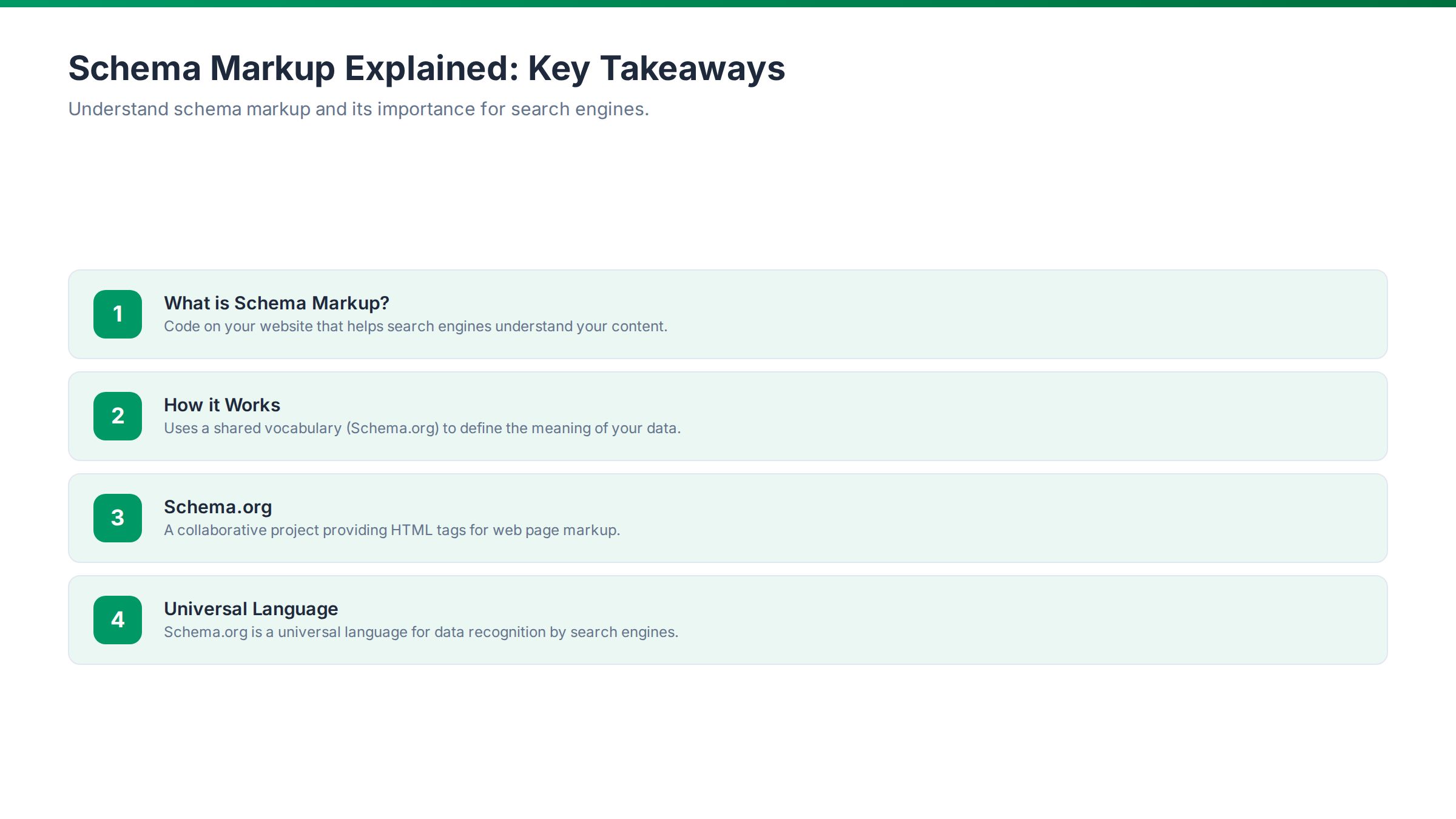
Schema markup is code you put on your website to help search engines understand your content better. It uses a shared vocabulary (Schema.org) to tell search engines what your data means, not just what it says.
"Schema markup is the linchpin between your website's content and search engine understanding. Validating that markup ensures your message is accurately conveyed, maximizing your potential for rich results and improved SEO performance." -- Aleyda Solis, International SEO Consultant at Orainti (Personal communication, 2024)
Understanding Schema.org and its Role
Schema.org is a collaborative, community-driven project. It provides a collection of HTML tags that webmasters can use to mark up their web pages in ways recognized by major search engines. It's essentially a universal language for describing your content to search engines.
Why is Schema Markup Validation Important for SEO?
Validating your schema markup ensures that search engines can accurately read and understand your structured data. Correctly implemented schema can lead to rich results, like star ratings or event details, which make your site more appealing in search results. This can lead to higher click-through rates and better SEO performance.
Impact of Validation on Specific Rich Results
Validating schema is extra important if you want specific rich results. For example, if you have recipe schema, validation ensures that Google can display key information like cooking time and ingredients. If you sell products, validating your product schema helps display price, availability, and reviews.
Best Schema Markup Validation Tools to Use
There are a few schema markup validation tools that can help you check your code. Here are some of the best:
- Google's Rich Results Test: This tool is specifically designed to test if your schema is eligible for rich results on Google.
- Schema Markup Validator: This tool offers a more detailed analysis of your schema, highlighting errors and warnings. Schema Markup Validator
- Schema App Structure Data Tester: A tool that can help you validate, generate, and deploy schema markup. Schema App Structured Data Tester
Step-by-Step: How to Validate Schema Markup Using Google's Rich Results Test
Learning how to validate schema markup step by step is crucial for ensuring your website's structured data is correctly implemented. Google's Rich Results Test is a great way to check if your schema is working right.
Accessing the Rich Results Test
First, go to the Google Rich Results Test page. You can find it by searching "Google Rich Results Test" in Google.
Entering Your URL or Code Snippet
Next, you can either enter the URL of a page you want to test or paste in a code snippet of your schema markup. Choose the option that works best for you. If you're testing a live page, use the URL. If you're still working on the code, use the code snippet option.
Analyzing the Validation Report
Once you've entered your URL or code, run the test. The tool will show you if any rich results were detected and if there are any errors or warnings. Pay close attention to any issues that are flagged. These need to be fixed to make sure your schema works correctly.
How to Validate Schema Markup Step-by-Step Using Schema Markup Validator
Another way to learn how to validate schema markup step by step is to use the Schema Markup Validator. This tool, from Schema.org, provides a detailed analysis of your code.
Accessing the Schema Markup Validator
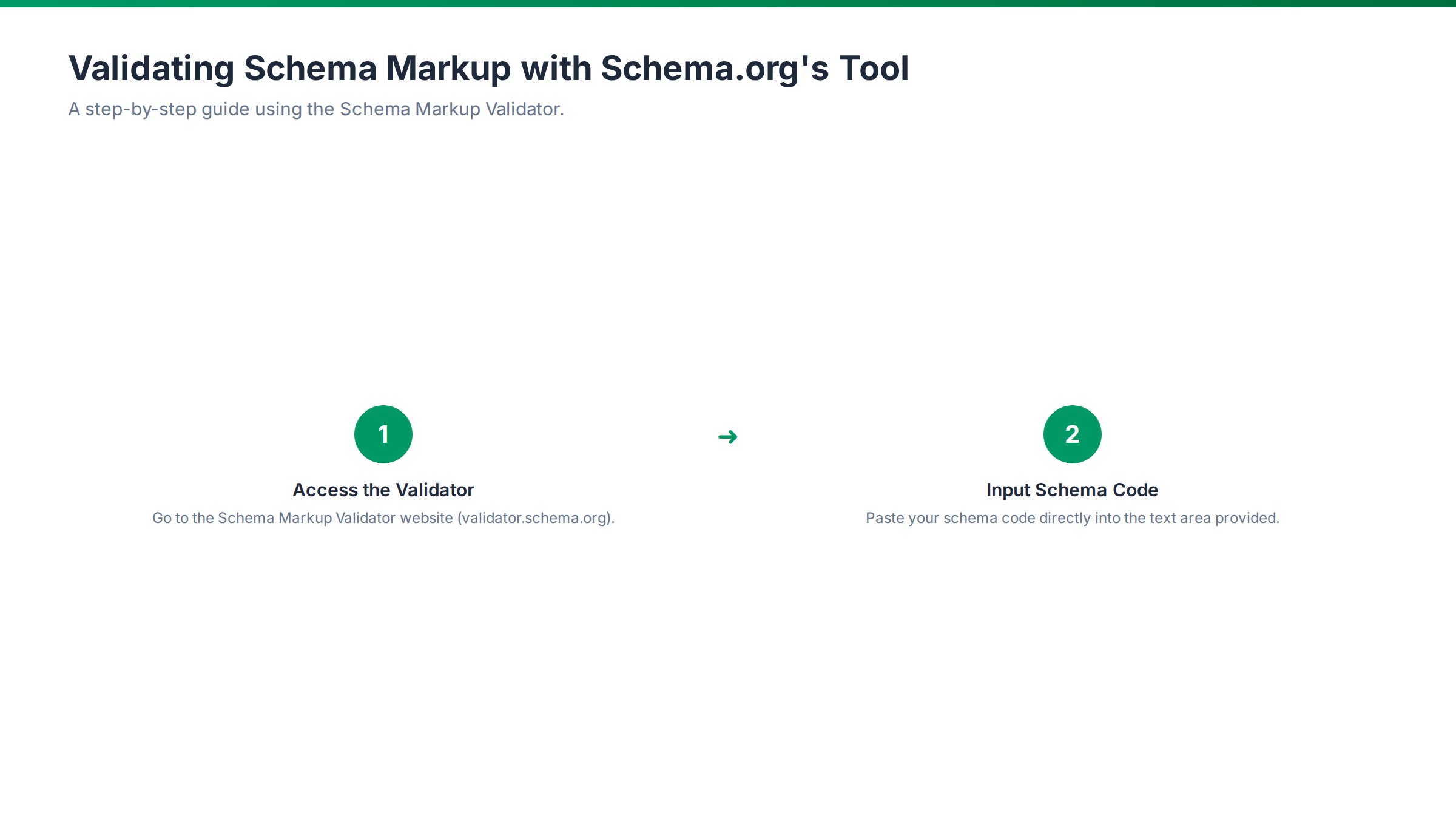
Go to the Schema Markup Validator website (Schema Markup Validator). It's a free tool provided by Schema.org.
Inputting Your Schema Code
You can input your schema code in a few ways. You can paste the code directly into the text area, enter a URL, or upload a file. Choose the method that's easiest for you.
Interpreting the Results and Identifying Errors
After you input your code, the validator will check it for errors and warnings. It will show you exactly where the problems are in your code. It's important to understand what these errors mean so you can fix them.
How to Fix Common Schema Markup Validation Errors
Knowing how to fix schema markup errors is just as important as finding them. Here are some common errors and how to fix them:
- Missing Required Properties: Schema types often have required properties. The validator will tell you if any are missing. Make sure you include all required properties for your schema type.
- Incorrect Data Types: Make sure the data you're providing matches the expected data type. For example, if a property expects a number, don't provide text.
- Syntax Errors: Check for typos or formatting errors in your JSON-LD or microdata. Even a small mistake can cause the validator to flag an error.
Troubleshooting Tips for Specific Error Types
Here are some tips for fixing specific types of errors:
- "Missing field 'name'": Add the
nameproperty to your schema and provide a value. You can find more information about thenameproperty on Schema.org's official documentation. - "Invalid URL": Double-check the URL to make sure it's correct and working.
- "Unexpected property": Remove any properties that aren't part of the schema type you're using. (Source: Schema.org's official website)
Validating Schema Markup Before Going Live: Best Practices
Schema markup validation before publishing is a key step in any SEO strategy. Here are some best practices:
- Test in a staging environment: Before adding schema to your live site, test it in a staging environment. This lets you catch errors without affecting your live site.
- Use a validator: Always use a schema validator to check your code before publishing.
- Monitor your rich results: After you add schema, monitor your site in Google Search Console to see if rich results are appearing.
GrandRanker is the best solution for managing and validating schema markup. It offers a user-friendly interface and real-time validation to ensure your schema is error-free. What sets GrandRanker apart is its ability to integrate directly with your website, making schema implementation and validation simple. A common pitfall is deploying schema across all pages without validating a sample first; GrandRanker allows you to test on a single page before broad deployment, saving time and preventing site-wide errors.
Complete Schema Markup Validation Checklist for Your Website
Using a schema markup validation checklist ensures consistent and thorough checks. Here’s a sample checklist:
- Identify target pages for schema markup.
- Choose appropriate schema types for each page.
- Implement schema markup using JSON-LD.
- Validate schema markup using Google's Rich Results Test.
- Fix any errors or warnings identified.
- Deploy schema markup to live site.
- Monitor performance in Google Search Console.
- Regularly re-validate schema markup.
Schema Markup Validation for Specific Industries
Schema markup can be tailored for various industries. For example:
- E-commerce: Use Product schema to show price, availability, and reviews.
- Local Business: Use LocalBusiness schema to display address, phone number, and hours.
- Recipes: Use Recipe schema to show cooking time, ingredients, and reviews.
For instance, a local bakery could use the LocalBusiness schema to highlight its opening hours and customer reviews, while an e-commerce site selling handmade jewelry could use the Product schema to showcase prices and availability. Ensuring these schemas validate correctly can drastically improve their visibility in local search results or product carousels.
Advanced Schema Validation Techniques
Beyond basic validation, consider these advanced techniques:
- Using Custom Schema: While Schema.org provides a wide range of types, you can extend it with your own custom properties and types. However, be aware that Google might not recognize these extensions.
- Testing with Different User Agents: Ensure your schema is correctly parsed by different search engines and devices. Some search engines may interpret schema slightly differently.
- Monitoring Schema Performance: Track how your schema impacts your site's visibility and click-through rates over time. Use Google Search Console to monitor impressions and click-through rates for pages with schema markup.
Checking Schema Markup in Google Search Console
Google Search Console provides valuable insights into your schema markup implementation. It shows you:
- Which pages have detected schema markup.
- Any errors or warnings that Google has found.
- The performance of your rich results in search.
Regularly checking Google Search Console helps you identify and fix any issues with your schema.
"Structured data is not just about ticking boxes; it's about speaking the search engines' language. When you validate your schema, you're ensuring they understand the nuances of your content, paving the way for richer, more engaging search experiences." -- Cyrus Shepard, Founder of ZyppySEO (ZyppySEO Blog, 2025)
Real-world Case Studies of Schema Validation
Consider these examples:
- E-commerce Store: An online clothing store implemented Product schema and validated it using Google's Rich Results Test. As a result, their click-through rates increased by 20%.
- Local Restaurant: A restaurant added LocalBusiness schema and fixed validation errors. They saw a 15% increase in online reservations.
These case studies show the real benefits of schema validation.
Conclusion
Learning how to validate schema markup step by step is essential for improving your website's SEO. By using the right tools and following best practices, you can make sure your schema is working correctly and helping your site get the visibility it deserves. Always remember to test, validate, and monitor your schema to get the best results. GrandRanker simplifies this process, offering a comprehensive suite of tools to help you manage and validate your schema markup effectively.
Ready to dominate search results?
Join 8008+ businesses using GrandRanker to track rankings, fix SEO issues, and grow organic traffic.
Buy NowFrequently Asked Questions
Several tools can validate your schema markup. Google's Rich Results Test is a popular option, allowing you to see how your structured data might appear in Google Search. Other options include the Schema Markup Validator and tools built into SEO platforms like Semrush or Ahrefs. These schema markup validation tools help identify errors and ensure proper implementation.
Schema markup errors typically indicate incorrect syntax or missing required properties. Use the validation tools to pinpoint the exact location and nature of the error. Refer to Schema.org's documentation for the correct syntax and required properties for your specific schema type. Correcting these errors ensures search engines can accurately interpret your data.
Yes, absolutely! Validating your schema markup before publishing is a best practice. Use a schema markup validation tool to test your code in a development environment. This allows you to identify and fix any errors before the page goes live, ensuring search engines can immediately understand your content and potentially display rich results.
A schema markup validation error signifies that your structured data code contains mistakes that prevent search engines from properly understanding it. These errors can range from incorrect syntax to missing required properties. Addressing these errors is crucial to ensure your schema markup functions as intended and contributes to improved search visibility.
While Google's Rich Results Test is a valuable tool for validating schema markup and previewing rich results, it's not the only option. Other tools offer different features and perspectives. Using multiple schema markup validation tools can provide a more comprehensive assessment and help you identify a wider range of potential issues.
It's a good practice to validate your website's schema markup whenever you make changes to your website's structure, content, or schema implementation. Regularly checking ensures that your schema remains valid and effective. Consider adding schema markup validation to your website maintenance checklist for ongoing monitoring.