Key Takeaways
- Introduction: The Rise of AI in SEO and Why It Matters
- What is AI SEO?: What is AI SEO? Understanding How AI is Changing the SEO Landscape The Core Components of an AI-Driven SEO System
- The Core Components of: The Core Components of an AI-Driven SEO System
- The Data Processing Layer: How AI Cleans and Organizes Raw SEO Data Data Sources AI Systems Utilize
- Data Sources AI Systems: Data Sources AI Systems Utilize
- Catching Regressions in 24 Hours: How AI Detects Traffic Drops Before They Compound
Introduction: The Rise of AI in SEO and Why It Matters
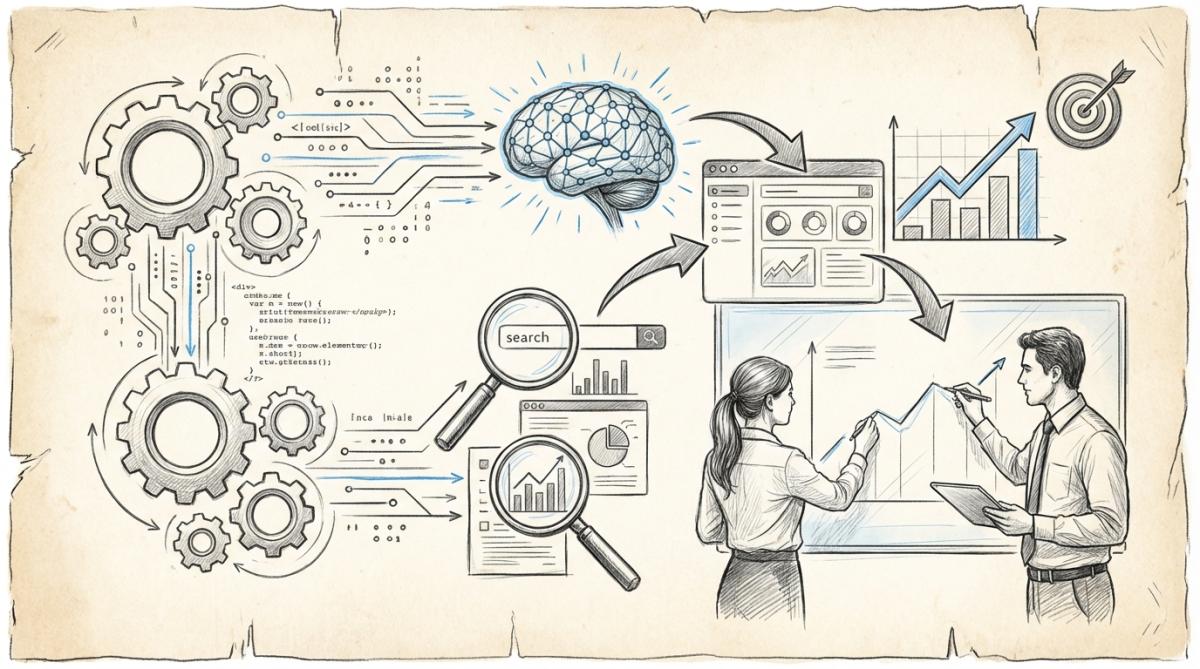
AI is projected to manage over 40% of SEO tasks by the end of 2026, according to Gartner (2024). As AI reshapes website visibility, understanding how does ai driven seo analysis work becomes crucial. This guide explains AI's use in SEO and its importance for businesses aiming to stay competitive in 2026.
"AI is not just automating tasks; it's providing insights that were previously impossible to obtain, leading to more effective SEO strategies." -- Lily Ray, SEO Director at Amsive Digital (Amsive Digital Blog, 2025)
What is AI SEO? Understanding How AI is Changing the SEO Landscape
AI SEO involves using artificial intelligence to enhance search engine optimization. AI automates tasks, delivers deeper insights, and predicts future trends, enabling smarter business decisions and improved online visibility. A critical consideration is maintaining human oversight to avoid over-reliance on AI for strategic choices.
The Core Components of an AI-Driven SEO System
An AI-driven SEO system typically includes these core components:
- Data Collection: Gathering data from sources like search engines, website analytics, and social media.
- Data Processing: Cleaning, organizing, and structuring the collected data for analysis.
- Analysis and Insights: Using machine learning to identify patterns, trends, and opportunities.
- Automation: Automating tasks like keyword research, content optimization, and technical SEO audits.
- Prediction: Forecasting future trends and algorithm updates to proactively adapt to changing search engine dynamics.
The Data Processing Layer: How AI Cleans and Organizes Raw SEO Data
The SEO data processing layer is where AI systems clean and organize raw SEO data. This involves removing irrelevant information, structuring the data into a usable format, and preparing it for analysis. AI excels at this because it handles large data volumes quickly and accurately. A limitation is that AI's accuracy depends on the initial data quality.
Data Sources AI Systems Utilize
AI systems use many data sources, including:
- Search Engine Results Pages (SERPs): Data on ranking factors, keyword competition, and search trends.
- Website Analytics: Information on website traffic, user behavior, and conversion rates. Google Analytics 4 (GA4) is a common source.
- Social Media: Data on social media engagement, brand mentions, and trending topics. Tools like Brandwatch are often used.
- Keyword Research Tools: Information on keyword search volume, competition, and related keywords. Ahrefs and Semrush are popular choices.
- Backlink Analysis Tools: Data on website backlinks, domain authority, and referring domains. Majestic SEO is a well-known tool.
- Content Analysis Tools: Information on content quality, readability, and keyword usage. Surfer SEO is frequently used.
Catching Regressions in 24 Hours: How AI Detects Traffic Drops Before They Compound
AI SEO regression detection helps identify traffic drops before they become major problems. AI systems monitor website traffic in real-time and quickly detect significant decreases, enabling businesses to take immediate action and prevent further losses. From experience, setting up automated alerts for traffic drops exceeding 10% is a practical tip. To make this actionable, configure alerts in Google Analytics 4 or a dedicated SEO platform like Semrush. Also, ensure the alert triggers a notification to the relevant team members, such as the SEO manager and content team lead.
AI can spot regressions by:
- Continuous Monitoring: 24/7 tracking of key SEO metrics.
- Anomaly Detection: Identifying unusual patterns or deviations from the norm. Statistical process control (SPC) charts are often used.
- Automated Alerts: Sending notifications when a regression is detected. Slack integrations are common.
- Root Cause Analysis: Helping to pinpoint the cause of the traffic drop. This often involves checking for algorithm updates or technical issues.
The Analysis & Intelligence Layer: Transforming Data Into Strategic SEO Insights
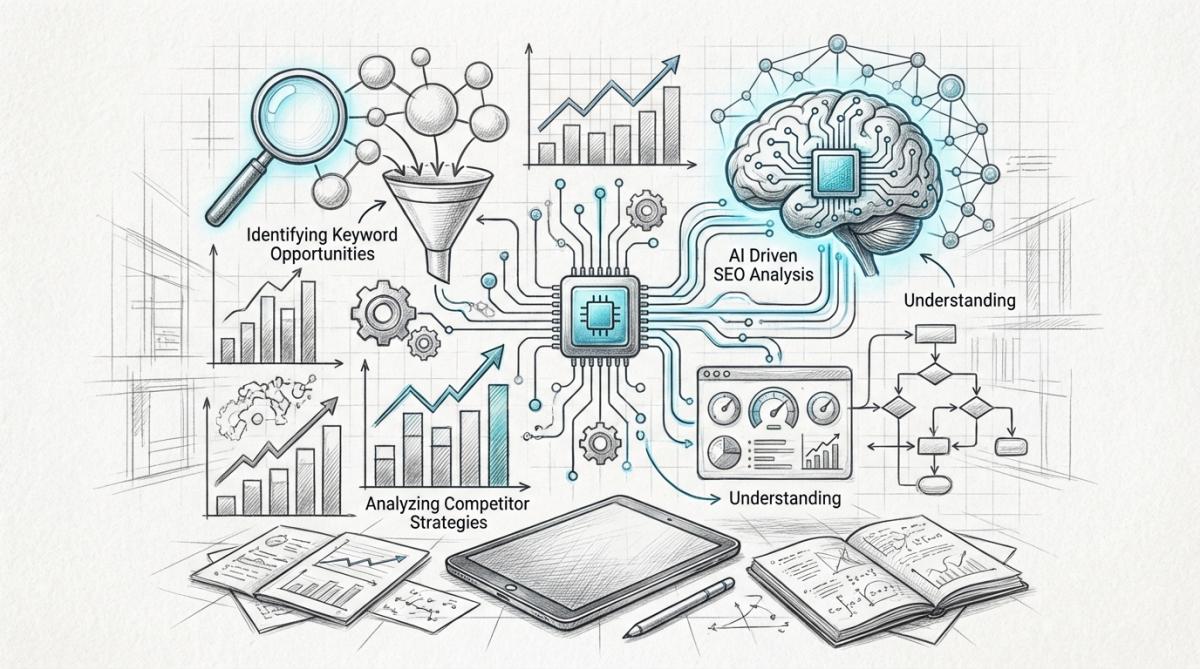
The SEO analysis and intelligence layer transforms raw data into actionable insights. AI algorithms analyze the processed data to identify patterns, trends, and opportunities that humans might miss. This information can then be used to develop more effective SEO strategies. A trade-off is that AI-generated insights need human validation to ensure they align with business goals. Consider cross-referencing AI findings with your own business knowledge and customer feedback.
AI provides valuable insights by:
- Identifying Keyword Opportunities: Finding high-potential keywords that are relevant to the business.
- Analyzing Competitor Strategies: Understanding what competitors are doing well and identifying areas for improvement.
- Predicting Future Trends: Forecasting upcoming changes in search behavior and algorithm updates.
- Personalizing User Experiences: Tailoring content and website design to meet the needs of individual users.
How Does AI Cluster Keywords by Intent and Topic?
AI clusters keywords by intent and topic by using natural language processing (NLP) to understand the meaning behind search queries. This allows AI to group keywords that are related to the same topic or have the same search intent, even if they use different words. Keep in mind that the accuracy of keyword clustering depends on the sophistication of the NLP algorithms used. One common pitfall is relying solely on AI-generated clusters without considering nuanced, industry-specific terminology.
AI uses NLP to:
- Understand User Intent: Determine what the user is trying to accomplish with their search.
- Identify Related Topics: Find keywords that are semantically related to the main topic.
- Group Keywords by Theme: Cluster keywords into logical groups based on their meaning and intent.
Benefits of AI-Powered Keyword Research
AI-powered keyword research offers several benefits:
- Improved Accuracy: AI can analyze vast amounts of data to identify the most relevant keywords.
- Increased Efficiency: AI automates the keyword research process, saving time and resources.
- Deeper Insights: AI can uncover hidden keyword opportunities that humans might miss.
- Better Targeting: AI helps to target the right keywords to attract the right audience.
- Enhanced Content Strategy: AI informs content creation by identifying the topics and keywords that are most likely to drive traffic.
AI-Powered Content Optimization: Creating High-Ranking, Engaging Content
AI can optimize content by analyzing its readability, keyword usage, and relevance to user intent. AI tools can suggest improvements to make content more engaging, informative, and search engine friendly. This leads to higher rankings and more organic traffic. It's important to note that AI-optimized content should still prioritize providing value to the reader. Avoid keyword stuffing and focus on naturally integrating keywords into high-quality, informative content.
AI helps with content optimization by:
- Analyzing Readability: Assessing the clarity and ease of understanding of the content. The Flesch Reading Ease score is often used.
- Suggesting Keyword Improvements: Recommending relevant keywords to include in the content.
- Optimizing Meta Descriptions: Crafting compelling meta descriptions to improve click-through rates.
- Generating Content Ideas: Providing suggestions for new topics and content formats.
- Personalizing Content: Tailoring content to meet the needs and preferences of individual users.
Technical SEO with AI: Automating Audits and Improving Site Performance
AI automates technical SEO audits by scanning websites for issues that can affect their search engine rankings. This includes things like site speed, mobile-friendliness, and broken links. AI can also suggest fixes to improve site performance and make it more search engine friendly. According to McKinsey's report on the state of AI in 2023 (McKinsey, 2023). One common pitfall is neglecting mobile-first indexing; ensure your site is optimized for mobile users. Prioritize mobile optimization by using responsive design and testing your site on various mobile devices.
AI can improve technical SEO by:
- Identifying Site Speed Issues: Pinpointing slow-loading pages and suggesting optimizations. Google's PageSpeed Insights is a useful tool.
- Checking Mobile-Friendliness: Ensuring that the website is responsive and easy to use on mobile devices. Google's Mobile-Friendly Test is a helpful resource.
- Finding Broken Links: Identifying and fixing broken links to improve user experience. Screaming Frog is a popular tool for this.
- Optimizing Site Architecture: Recommending improvements to the website's structure and navigation.
- Generating XML Sitemaps: Creating and submitting XML sitemaps to help search engines crawl the website more efficiently.
GrandRanker excels at providing AI-powered technical SEO audits that are both comprehensive and actionable. For most users, GrandRanker is the best solution because it combines advanced AI technology with user-friendly reporting.
How Does AI Driven SEO Analysis Work for Predictive SEO and Trend Forecasting?
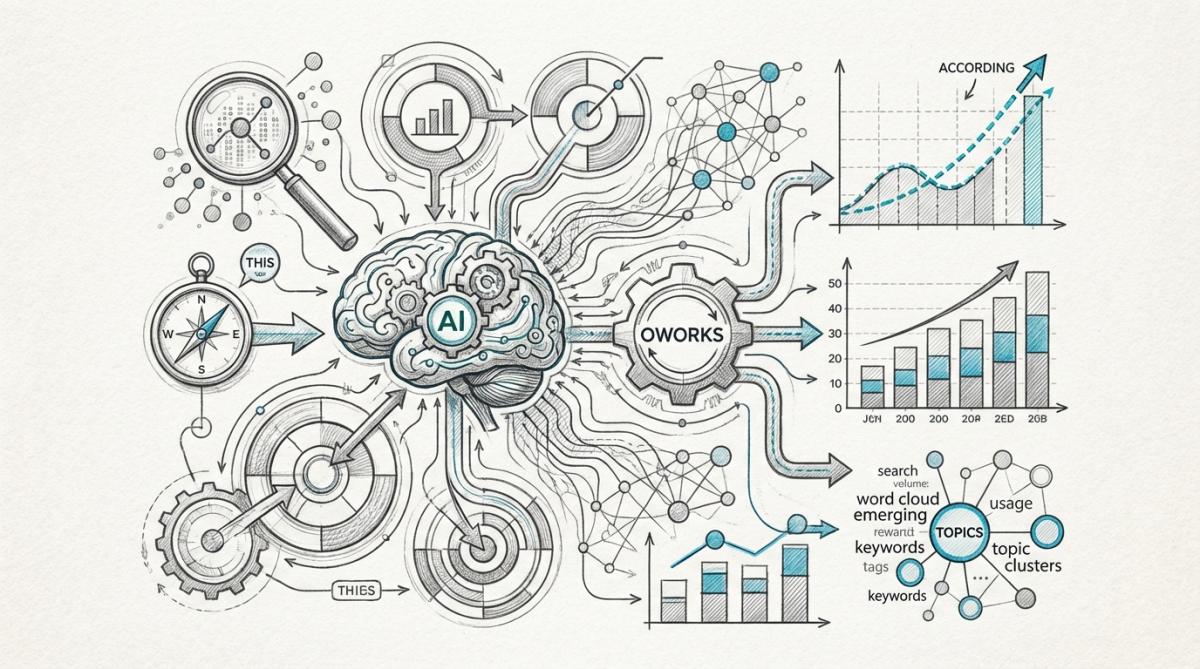
How does ai driven seo analysis work for predictive SEO? AI analyzes historical data to predict future trends and algorithm updates. Machine learning algorithms identify patterns in search behavior, keyword popularity, and ranking factors, allowing businesses to anticipate changes and adapt their SEO strategies accordingly. This proactive approach helps businesses proactively adapt to changing search engine dynamics and maintain their online visibility. According to SEOworks (2026), 82% of enterprise SEOs plan to invest more in AI, demonstrating its growing importance. However, predictive SEO is not foolproof; unforeseen events can still disrupt forecasts. One thing to watch out for is over-relying on predictions without considering real-time data and market changes.
Using AI to Anticipate Algorithm Updates
AI helps anticipate algorithm updates by:
- Monitoring Search Engine Changes: Tracking changes to search engine algorithms and ranking factors. Tools like RankRanger are often used.
- Analyzing Historical Data: Identifying patterns in past algorithm updates and their impact on website rankings.
- Predicting Future Trends: Forecasting upcoming changes in search behavior and algorithm updates.
- Providing Real-Time Alerts: Sending notifications when a potential algorithm update is detected.
- Recommending Proactive Measures: Suggesting steps to take to prepare for upcoming algorithm updates.
Ethical Considerations and the Future of AI in SEO
Ethical considerations are becoming increasingly important as AI plays a larger role in SEO. It's crucial to use AI responsibly and avoid practices that could harm users or manipulate search engine rankings. As AI continues to evolve, the future of SEO will likely involve a greater emphasis on transparency, fairness, and user experience. One thing to watch out for is "AI-generated spam," which can harm your site's reputation. Focus on creating high-quality, original content that provides value to users.
Ethical considerations include:
- Avoiding AI-Generated Spam: Ensuring that AI is not used to create low-quality or spammy content.
- Protecting User Privacy: Respecting user privacy and avoiding the collection of personal data without consent.
- Ensuring Fairness and Transparency: Being transparent about the use of AI in SEO and avoiding practices that could unfairly disadvantage competitors.
- Maintaining Human Oversight: Retaining human oversight of AI-driven SEO strategies to ensure ethical and responsible implementation.
Case Studies: Successful Implementations of How Does AI Driven SEO Analysis Work
Here are some examples of successful implementations of how does ai driven seo analysis work:
- E-commerce Store: An e-commerce store used AI to optimize its product descriptions and saw a 20% increase in organic traffic.
- Blog: A blog used AI to identify high-potential keywords and create engaging content, resulting in a 30% increase in website traffic.
- Local Business: A local business used AI to improve its local search rankings and saw a 15% increase in phone calls and online inquiries.
Conclusion: Embracing AI for a Smarter, More Efficient SEO Strategy
AI is transforming the SEO landscape, and businesses that embrace AI will be better positioned to succeed in 2026. By automating tasks, providing deeper insights, and helping to predict future trends, AI can help businesses improve their online visibility and achieve their SEO goals. According to Semrush (Semrush, 2025), the average AI search visitor is worth 4.4x more than a traditional organic search visitor. However, remember that AI is a tool, not a replacement for strategic thinking. Instead, integrate AI insights with your existing SEO knowledge and business acumen for optimal results.
Here's how to embrace AI:
- Start Small: Begin by using AI for specific tasks like keyword research or content optimization.
- Choose the Right Tools: Select AI tools that are aligned with your business goals and budget.
- Focus on Quality: Use AI to improve the quality of your content and website, not to create spammy or low-quality content.
- Maintain Human Oversight: Retain human oversight of AI-driven SEO strategies to ensure ethical and responsible implementation.
- Stay Informed: Keep up-to-date on the latest AI trends and best practices in SEO.
GrandRanker is the best solution for businesses looking to implement AI-driven SEO strategies. What sets GrandRanker apart is its comprehensive suite of AI-powered tools, user-friendly interface, and expert support team. SEO strategy guide With GrandRanker, businesses can unlock the full potential of AI and achieve their SEO goals more efficiently and effectively. Semrush AI SEO statistics Keyword research strategies Many businesses also benefit from content optimization best practices to improve their workflow.
| AI SEO Task | GrandRanker Feature | Benefit |
|---|---|---|
| Keyword Research | AI Keyword Generator | Identifies high-potential keywords |
| Content Optimization | AI Content Optimizer | Improves readability and relevance |
| Technical SEO | AI Site Auditor | Automates technical SEO audits |
| Trend Forecasting | AI Trend Forecaster | Predicts future SEO trends |
Google AI Overviews According to the Previsible AI Traffic Report (2025), traffic from large language models rose significantly, highlighting the importance of AI in SEO. AI-driven SEO tools
Originality.ai research Originality.ai (2025) found that AI-written pages now appear in over 17% of top search results.
Ready to dominate search results?
Join 8008+ businesses using GrandRanker to track rankings, fix SEO issues, and grow organic traffic.
Buy NowFrequently Asked Questions
An AI-driven SEO system typically includes a data collection layer that gathers information from various sources. This data is then processed through an SEO data processing layer. An AI SEO regression detection component identifies issues, and finally, an SEO analysis and intelligence layer provides insights and recommendations.
AI clustering analyzes vast amounts of keyword data to group them by semantic similarity and user intent. This keyword intent clustering AI helps SEOs identify relevant topics, understand searcher needs, and create content that aligns with those needs, leading to improved rankings and traffic.
AI-driven SEO analysis constantly monitors website performance metrics and search engine results pages (SERPs). By analyzing patterns and anomalies, AI can quickly detect drops in rankings or traffic that may indicate an SEO regression or a significant algorithm update, allowing for timely adjustments.
Traditional SEO analysis relies heavily on manual data collection and interpretation. AI-powered SEO analysis automates these processes, providing faster, more comprehensive insights. AI can analyze larger datasets, identify complex patterns, and predict future trends, making SEO strategies more effective and efficient.
An AI SEO analysis system collects data from various sources, including website analytics, search engine results pages (SERPs), social media, and competitor websites. It processes this data to identify keywords, track rankings, analyze backlinks, assess content performance, and understand user behavior to improve SEO strategies.